Interview multiple candidates
Lorem ipsum dolor sit amet, consectetur adipiscing elit proin mi pellentesque lorem turpis feugiat non sed sed sed aliquam lectus sodales gravida turpis maassa odio faucibus accumsan turpis nulla tellus purus ut cursus lorem in pellentesque risus turpis eget quam eu nunc sed diam.
Search for the right experience
Lorem ipsum dolor sit amet, consectetur adipiscing elit proin mi pellentesque lorem turpis feugiat non sed sed sed aliquam lectus sodales gravida turpis maassa odio.
- Lorem ipsum dolor sit amet, consectetur adipiscing elit.
- Porttitor nibh est vulputate vitae sem vitae.
- Netus vestibulum dignissim scelerisque vitae.
- Amet tellus nisl risus lorem vulputate velit eget.
Ask for past work examples & results
Lorem ipsum dolor sit amet, consectetur adipiscing elit consectetur in proin mattis enim posuere maecenas non magna mauris, feugiat montes, porttitor eget nulla id id.
- Lorem ipsum dolor sit amet, consectetur adipiscing elit.
- Netus vestibulum dignissim scelerisque vitae.
- Porttitor nibh est vulputate vitae sem vitae.
- Amet tellus nisl risus lorem vulputate velit eget.
Vet candidates & ask for past references before hiring
Lorem ipsum dolor sit amet, consectetur adipiscing elit ut suspendisse convallis enim tincidunt nunc condimentum facilisi accumsan tempor donec dolor malesuada vestibulum in sed sed morbi accumsan tristique turpis vivamus non velit euismod.
“Lorem ipsum dolor sit amet, consectetur adipiscing elit nunc gravida purus urna, ipsum eu morbi in enim”
Once you hire them, give them access for all tools & resources for success
Lorem ipsum dolor sit amet, consectetur adipiscing elit ut suspendisse convallis enim tincidunt nunc condimentum facilisi accumsan tempor donec dolor malesuada vestibulum in sed sed morbi accumsan tristique turpis vivamus non velit euismod.
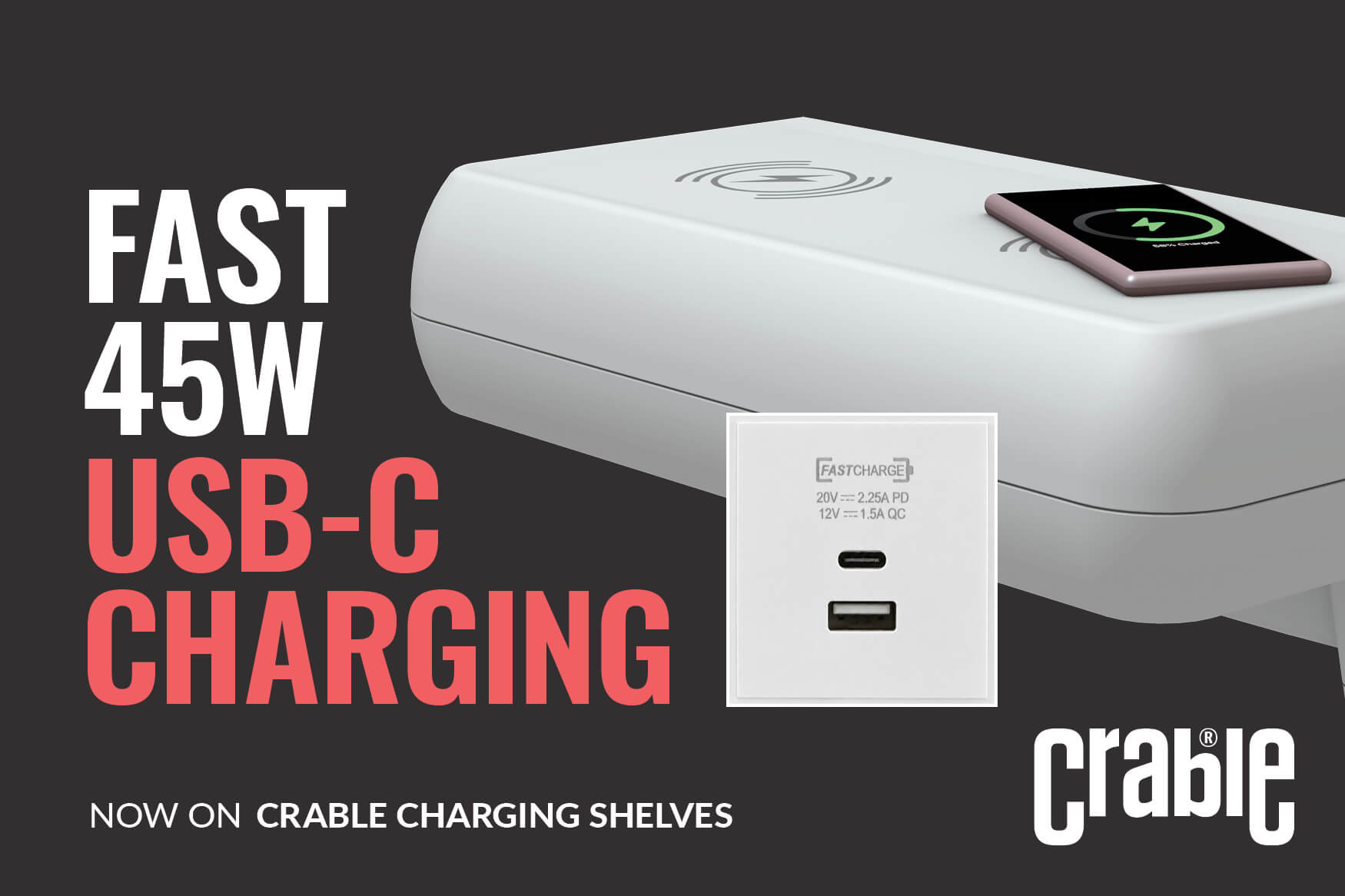
In our article announcing the move to 25W Qi2 wireless charging, we mentioned that something else was happening at the other end of the cable. Here it is: Crable Charging Shelves are gaining USB-C fast charging at up to 45W.
And this is a genuinely exciting step for public phone charging, because the phones are ready for it. Apple, Google and Samsung now sell mainstream phones designed to take advantage of 40W, 45W and even higher wired charging. When somebody only has ten or fifteen minutes available, that extra power can make a real difference.
We’ve kept USB-A too. While USB-C is clearly where phone charging is heading, there are still millions of perfectly good USB-A cables in bags, cars, offices and kitchen drawers.
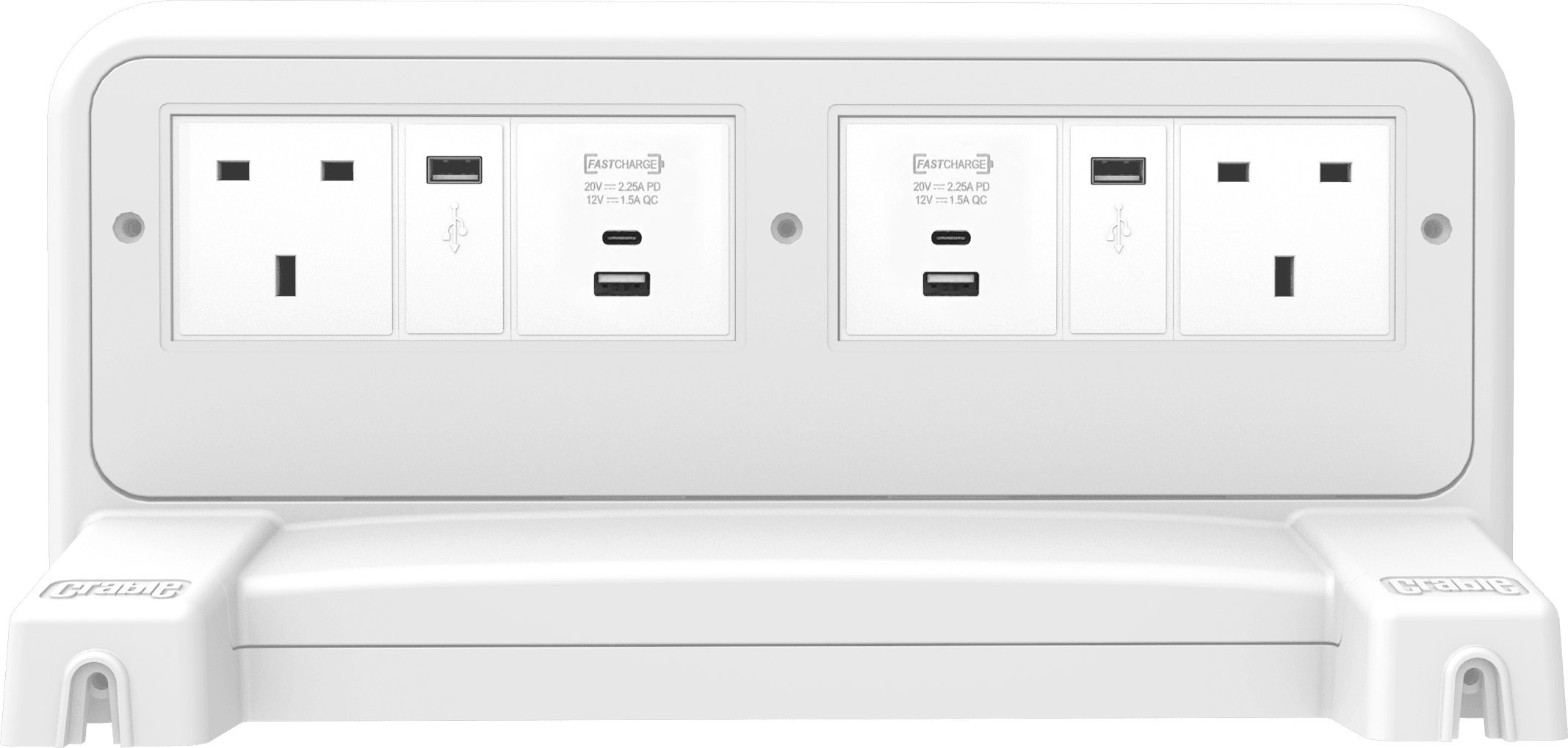
Put it all together and a suitably configured Charging Shelf now gives users ten ways to charge:
- 2 × USB-C ports — up to 45W each *
- 2 × USB-A ports — up to 18W each
- 2 × independent USB-A ports — 12W each
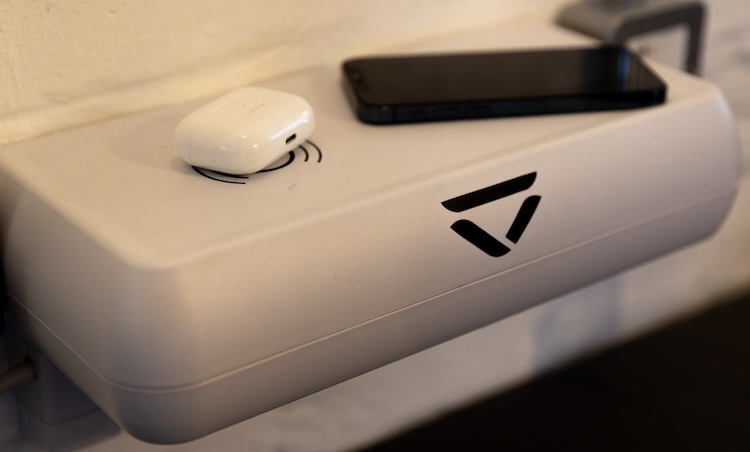
- 2 × Qi2 wireless charging positions — up to 25W each
- 2 × mains sockets
Total: 10 charging points per Charging Shelf.
* USB-C reduces to up to 27W when the paired USB-A port is also in use; see power-sharing below.
And the numbers add up quickly. Our four-sided Charging Totems contain four Charging Shelves, giving users up to 40 charging points on a single Totem.
25W wireless. 45W wired. 10 ways to charge. One Charging Shelf.
Fast phone charging matters when you’ve only got 15 minutes
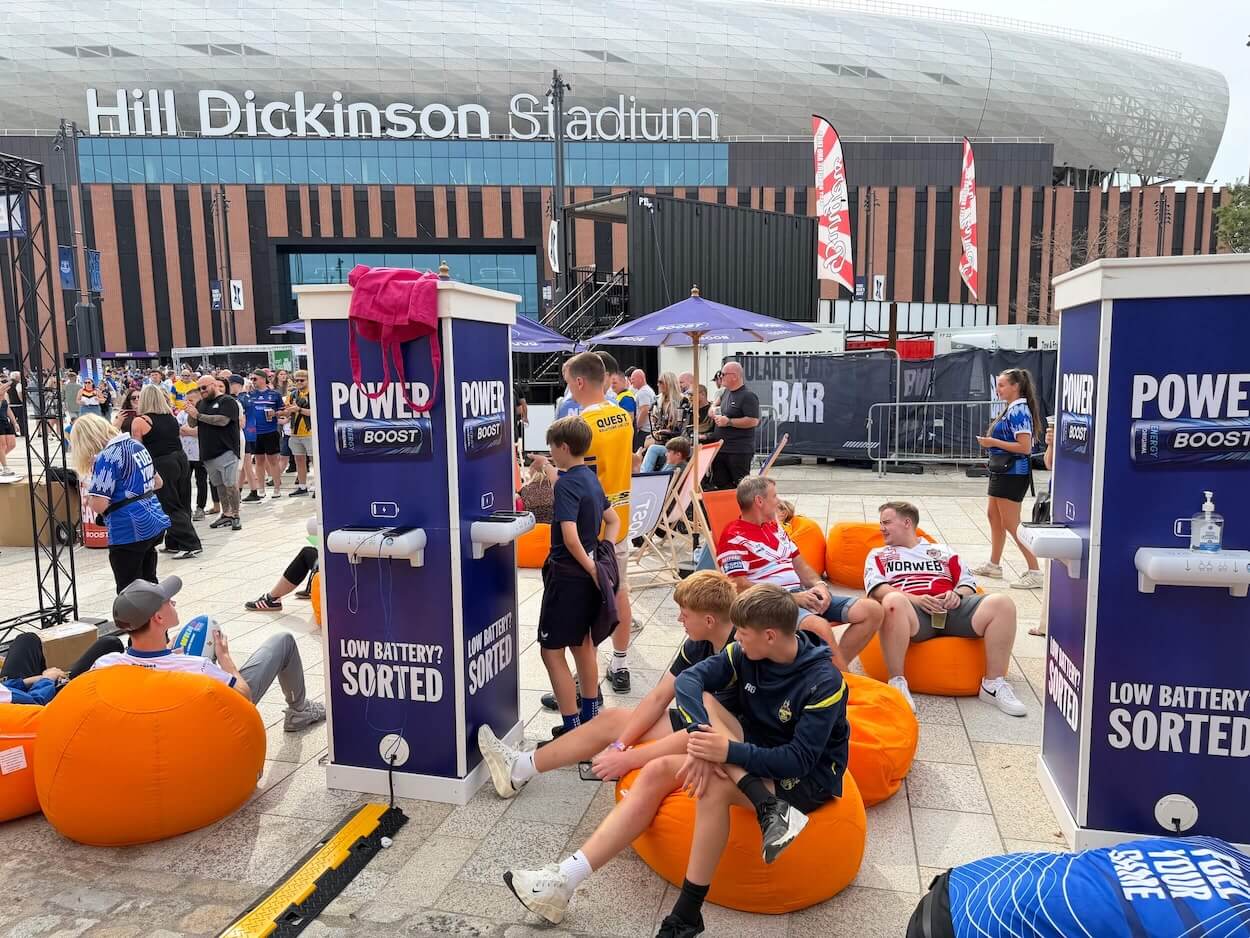
Half-time at stadiums is a great example. Your phone is on 8%. You’ve used it for your ticket, payments, photos and messages, and your train ticket home is probably on there too. You’ve got around 15 minutes before the teams come back out.
At that point, nobody is wondering how quickly their phone can get from 0–100%. They want to know how much useful charge they can get before the second half starts.
Airports and Transport Hubs create the same problem in different ways: a short wait before boarding, ten minutes while getting a coffee or an unexpectedly tight connection. Hospitals are different again. Nobody plans an unexpectedly long day there, but when it happens a working phone can mean contact with family, transport, payments and access to information.
That’s what makes public charging so interesting. At home, time usually isn’t the problem. In public, time is often the whole problem.
The phone can actually use 45W now
A few years ago there wouldn’t have been much point putting 45W behind a public USB-C socket. Most phones simply couldn’t use it. That has changed quickly.
Apple says the iPhone 17 can reach up to 50% charge in around 20 minutes with a suitable 40W-or-higher adapter andUSB-C cable. Google says the Pixel 10 Pro XL can reach up to 70% in about 30 minutes using a 45W USB-C PPS charger or higher. Samsung quotes up to 69% in around 30 minutes for the Galaxy S26+ using a 45W adapter.
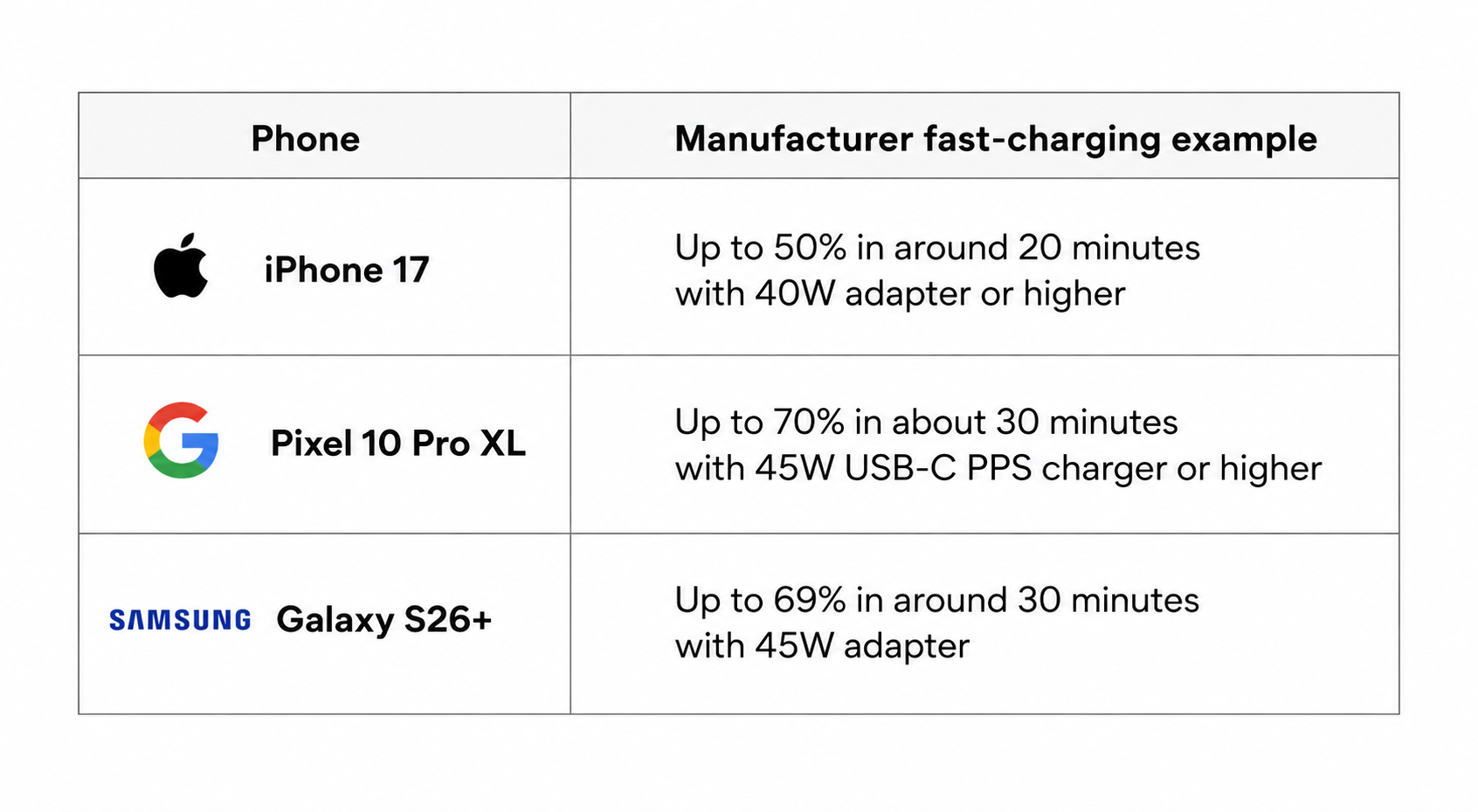
If the phone can accept faster charging, we don’t want the Charging Shelf to be the thing holding it back.
That’s why we’re making the change now. The phones are ready, the charging hardware is ready, and we’re comfortable putting it into Charging Stations expected to work day after day and year after year.
A very short history of USB
Phone charging has taken quite a route to get here. Many of us remember proprietary chargers, then Micro-USB, then Apple’s Lightning connector, while the familiar USB-A socket remained at the charger end of millions of cables. USB-C changed that.
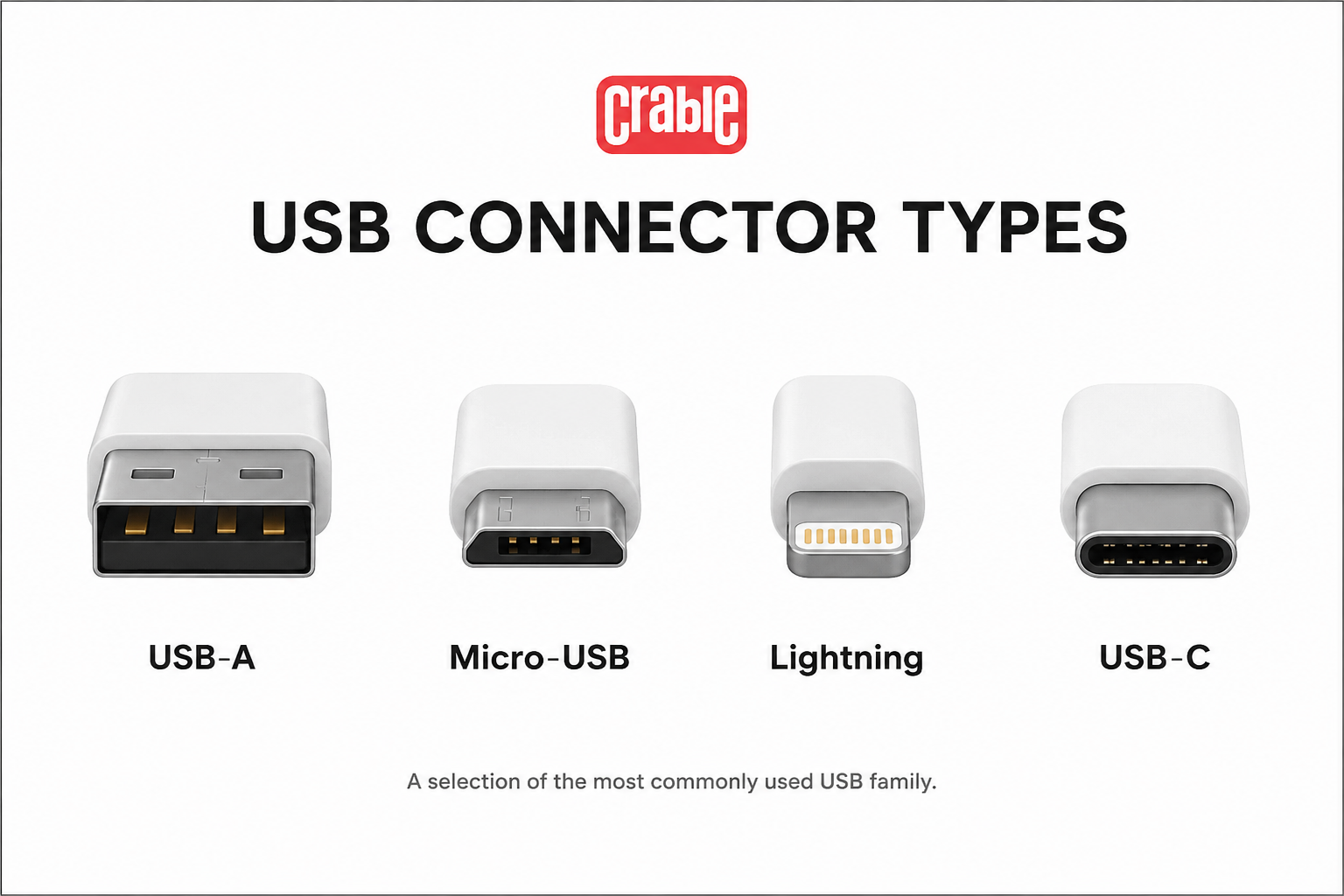
For a while, lots of us had USB-C phones without really having USB-C charging all the way through. The phone had USB-C, but the cable often ran back to an older USB-A charger, often with around 15–18W available from mainstream USB-A fast chargers. Now USB-C-to-USB-C cables are becoming normal and USB Power Delivery means our new port can make up to 45W available.
Apple moved the iPhone to USB-C with the iPhone 15 in 2023, and EU common-charger rules have pushed the wider market in the same direction. Our best guess is that USB-C will be the default wired phone-charging connection for many years to come. It already has plenty of room for phone makers to increase charging power without changing the connector again.
That matters because Charging Stations are often bought or rented for the long term. If the Station is going to be there for years, the technology inside it needs to age well too. We’ll keep a close eye on what comes next. We always do.
45W USB-C without the charging brick
There’s another reason we like having 45W USB-C built directly into the Charging Shelf. Finding a mains socket has traditionally only solved half the problem because you still needed the charging adapter to plug into it. With a suitable USB-C cable and compatible phone, the charging hardware is already built into the Shelf.
Bring your cable. You may be able to leave the plug at home.
That doesn’t mean connecting any phone to a 45W socket automatically sends 45W into the battery. The charger and phone communicate to agree how much power the phone can accept, while battery level, temperature, handset capability, charging protocols and other conditions can change the actual charging rate. The phone is still the boss.
And the cable matters too. A good 45W charging port can’t turn a poor cable into a good one, and cable quality, specification and length can all affect charging performance. For a public Charging Station, there’s also very little benefit in having metres of spare cable when the phone is sitting right beside the socket. There is, however, plenty of extra cable available to tangle, pull, tread on and damage.
That’s why we prefer good-quality, properly specified cables that are only as long as the charging position needs —normally around 0.5m, or up to 1m where required. We’ve gone much further into all the things that can slow phone charging down in Why Is My Phone Charging Slowly?.
45W for one person. Useful charging for two.
Each new module contains one USB-C port and one USB-A port. Used on its own, USB-C can make up to 45W available. If the paired USB-A port is used at the same time, the module shares that power:
USB-C: up to 27W
USB-A: up to 18W
We think that’s a useful way for a public charger to behave. One person can access the full 45W; when both ports are being used, both people still get useful charging power. The Shelf also has two independent 12W USB-A ports.
USB-C has clearly won the long-term argument. USB-A has won the argument about what’s still in people’s bags today. So, for now, we provide both.
Faster charging. Tiny electricity cost.
This is one of our favourite bits. 45W sounds like a lot when we’re talking about charging a phone. In electricity terms, it really isn’t.
Imagine a phone managed to draw the full 45W continuously for ten minutes — already a generous example, because phones normally reduce their charging rate as the battery fills. That would use 0.0075kWh.At an illustrative electricity price of 30p/kWh, it costs 0.225p — less than a quarter of one penny.
Scale that up to 5,000 ten-minute charges and the electricity would cost about £11.25. For comparison, the UK National Living Wage for someone aged 21 or over is £12.71 an hour in 2026. In other words, the electricity for 5,000 charging opportunities costs less than one hour of staff time at National Living Wage.
We’re not claiming those charges automatically save an hour of staff time. Good customer service often means giving people what you already know they’re going to need:
- “My train ticket’s on my phone and my battery’s dead.”
- “I’ve been at the hospital all day. I need to call home.”
- “I’ve got 8% left. I just need enough charge to get me through the second half.”
- “My boarding pass is on my phone. Where can I charge it?”
Across several Charging Shelves or Charging Totems in busy events or public venues, thousands of charging sessions are entirely realistic. The electricity needed to solve the problem is incredibly cheap.
If you know people are going to need phone charging, give them good phone charging.
Don’t waste their time looking for it, or your team’s time repeatedly helping people find it. We’ve looked at the wider numbers in What Does Free Phone Charging Cost in 2026?.
45W USB-C or 25W wireless?
Both. 25W Qi2 wireless is about convenience: put down a compatible phone, let the magnetic alignment help position it and charging begins. 45W USB-C gives somebody with a suitable cable and compatible phone access to more charging power when time is short.
Different people will prefer different ways of charging, which is why the Charging Shelf gives them both. And no, connecting your phone to the 45W USB-C port and putting the same phone on the 25W wireless charger will not give you 70W charging.
Nice try.
Public phone charging should actually charge
How many times have you connected your phone to a public USB port and looked at the battery percentage and wondered whether anything is actually happening? Sometimes the charging point isn’t the problem. It could be the phone, battery temperature, battery level or cable. But if the port itself can only provide 5W, there’s an obvious limit to what it can achieve.
We don’t think public phone charging should simply make a charging symbol appear on the screen. It should give people a useful amount of charge in the time they have available.
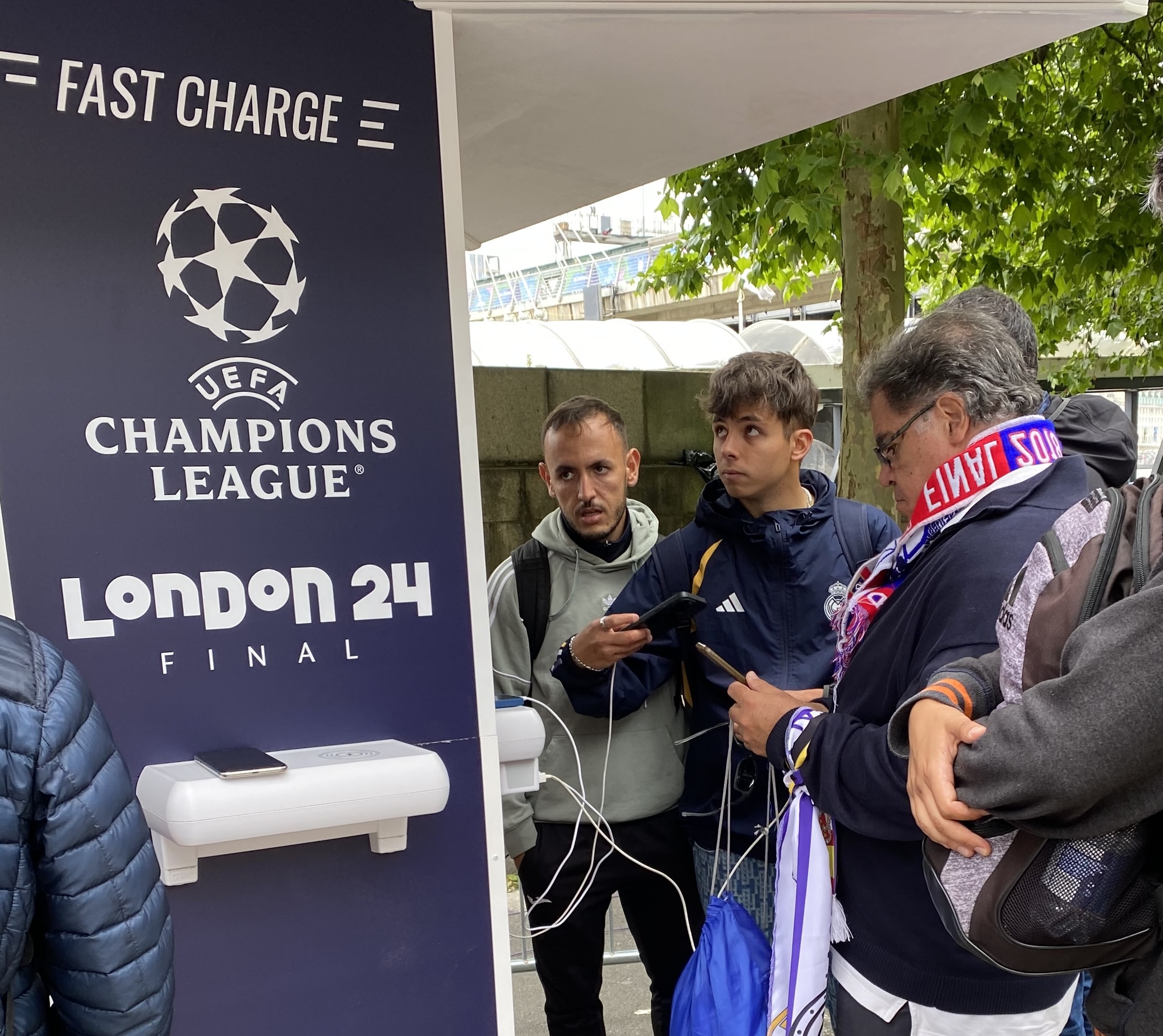
That’s also why we don’t adopt every new charging technology the moment it appears. Public Charging Stations have to withstand heavy use, so the technology has to meet our standards for performance, reliability, robustness, repairability and cost before we build it into products expected to work for years.
Crable only makes phone charging solutions. We’ve developed and protected our own ideas around them, with patent protection and registered European designs, because public phone charging isn’t a sideline for us. It’s what we spend our time thinking about.
We think that Crable makes the UK’s best public phone Charging Stations. It’s the standard we set ourselves but it’s for our customers and the people using them to decide.
We don’t measure a new Charging Shelf by asking whether it’s good enough compared with somebody else’s. We ask how good we can make it while keeping it robust, repairable and affordable enough for the real world.
Whether it’s half-time at a stadium, ten minutes before boarding at an airport or a long day in hospital, there’s always a person at the other end of the cable. And we really do love keeping them charged.
If you're looking at phone charging for your venue, come and talk to us. We’d love to hear what you're trying to achieve.


Join our mailing list
Sign up to our mailing list to be informed of relevant updates and insights from Crable.