Interview multiple candidates
Lorem ipsum dolor sit amet, consectetur adipiscing elit proin mi pellentesque lorem turpis feugiat non sed sed sed aliquam lectus sodales gravida turpis maassa odio faucibus accumsan turpis nulla tellus purus ut cursus lorem in pellentesque risus turpis eget quam eu nunc sed diam.
Search for the right experience
Lorem ipsum dolor sit amet, consectetur adipiscing elit proin mi pellentesque lorem turpis feugiat non sed sed sed aliquam lectus sodales gravida turpis maassa odio.
- Lorem ipsum dolor sit amet, consectetur adipiscing elit.
- Porttitor nibh est vulputate vitae sem vitae.
- Netus vestibulum dignissim scelerisque vitae.
- Amet tellus nisl risus lorem vulputate velit eget.
Ask for past work examples & results
Lorem ipsum dolor sit amet, consectetur adipiscing elit consectetur in proin mattis enim posuere maecenas non magna mauris, feugiat montes, porttitor eget nulla id id.
- Lorem ipsum dolor sit amet, consectetur adipiscing elit.
- Netus vestibulum dignissim scelerisque vitae.
- Porttitor nibh est vulputate vitae sem vitae.
- Amet tellus nisl risus lorem vulputate velit eget.
Vet candidates & ask for past references before hiring
Lorem ipsum dolor sit amet, consectetur adipiscing elit ut suspendisse convallis enim tincidunt nunc condimentum facilisi accumsan tempor donec dolor malesuada vestibulum in sed sed morbi accumsan tristique turpis vivamus non velit euismod.
“Lorem ipsum dolor sit amet, consectetur adipiscing elit nunc gravida purus urna, ipsum eu morbi in enim”
Once you hire them, give them access for all tools & resources for success
Lorem ipsum dolor sit amet, consectetur adipiscing elit ut suspendisse convallis enim tincidunt nunc condimentum facilisi accumsan tempor donec dolor malesuada vestibulum in sed sed morbi accumsan tristique turpis vivamus non velit euismod.
We have some genuinely exciting charging news. Crable Charging Shelves are moving to 25W Qi2 wireless charging as standard.
This is a big step forward for public wireless charging, and not simply because 25 is a larger number than 15. The phones are arriving that can actually make use of this additional power. Apple’s latest generations of iPhone support wireless charging at up to 25W, while Samsung is now firmly moving into the 25W Qi2 world too. These are the devices people are carrying into railway stations, hospitals, stadiums, universities, workplaces and events and we want the charging infrastructure waiting for them to be every bit as capable.
For Crable, this is the latest step in a journey that started with 5W wireless charging in our Charging Shelves back in2018. As phone technology progressed, we moved to 15W and have supplied that higher-than-industry-standard wireless charging performance for more than five years. Now the technology has moved forward again and, crucially, reached the point where we believe it is sufficiently proven and reliable for the demanding commercial environments in which Crable Charging Stations operate.
If the phone in somebody’s pocket can accept faster charging, we don’t want the Charging Shelf to be the thing holding it back.
Our new 25W Qi2 wireless chargers will become standard in new Crable Charging Shelves, including the Shelves incorporated into our Charging Totems and forthcoming Charging Posts. New purchases and long-term rentals will move to 25W as standard, with our short-term hire fleet transitioning progressively as existing equipment is replaced and upgraded.
Five minutes can matter enormously
This is where public phone charging becomes much more interesting than a discussion about watts and specifications.
Imagine you’re at a railway station with 6% battery and your train leaves in eight minutes. Your ticket is on your phone. Your railcard is on your phone. Your connection at the other end is on your phone too. You don’t need to sit beside a charger until the battery reaches 100%, and you probably don’t particularly care whether it reaches 20%. You simply need enough power to get through the ticket barrier, onto the train and comfortably through the next part of your journey.
And you’ve got five minutes.
That’s the fundamental difference between charging at home and charging in public. At home, your phone can sit beside the bed for seven hours and nobody cares whether it reached full charge at 1:15 am or 2:30 am. At a railway station, stadium, hospital, airport, conference or shopping centre, the useful charging opportunity might be ten minutes. Sometimes it might genuinely be five.
This is why we’ve always been slightly suspicious of charging-speed discussions based entirely around how long a battery takes to go from 0% to 100%. That’s useful information for comparing devices, but it isn’t necessarily how people use public charging.
Public charging isn’t about how long it takes to reach 100%. It’s about how much useful charge you can get in the time you actually have.
That’s why we’re so enthusiastic about 25W wireless charging. It gives the latest compatible phones access to substantially more charging power during precisely those short periods when it matters most.
From 5W to 15W to 25W
Wireless charging has been part of Crable Charging Shelves since 2018, when we started with 5W. As phones became capable of accepting more power and the technology became sufficiently reliable, we moved to 15W. We’ve supplied 15W wireless charging for more than five years, putting genuinely useful wireless charging into public places while plenty of commercial charging products were still delivering considerably less.
Now we’re moving from 15W to 25W Qi2.
There is an important philosophy behind that progression. We don’t adopt a technology because it appeared yesterday in a press release or because it gives us a bigger number for a brochure. A Crable Charging Shelf might spend years in a railway station, hospital, university, stadium or workplace being used by thousands upon thousands of people. New technology isn’t terribly impressive if it doesn’t keep working.
Our approach has therefore always been to move with charging technology as soon as the improvement is useful, established and reliable enough for the real world. In 2018 that meant 5W. More than five years ago it meant moving to 15W. Today it means 25W, and that progression is something we’re extremely proud of.
The phones are ready for it
Perhaps the most exciting thing about this upgrade is that 25W isn’t a theoretical charging capability installed in anticipation of some distant future generation of phones. Compatible handsets are already here — so let’s look at some of them.
Which phones can use faster Qi2 wireless charging?
The important thing about our move to 25W is that the phones are already arriving to take advantage of it. Current Apple, Samsung and Google handsets already include models designed for 15W, 20W and 25W wireless charging, so a 25W Crable Charging Shelf gives each compatible phone room to charge at the rate it is designed to accept.
25W is no longer a specification waiting for future phones. iPhones, Galaxy phones and Google Pixels capable of using it are already in people’s pockets.
Examples include the iPhone 17 and iPhone 16 / 16 Plus at up to 25W, the iPhone Air at up to 20W, the Galaxy S26 Ultra at up to 25W, the Galaxy S26+ at up to 20W and the Galaxy S26 at up to 15W. Google’s Pixel 10Pro XL can also use up to 25W, while the Pixel 10, Pixel 10 Pro and Pixel 10Pro Fold charge at up to 15W.
That variation is actually a very useful illustration of how public charging works. Even phones from the same manufacturer and the same generation can have different maximum charging rates. The Charging Shelf therefore makes up to 25W available, while the handset decides how much of that power it can safely and effectively use.
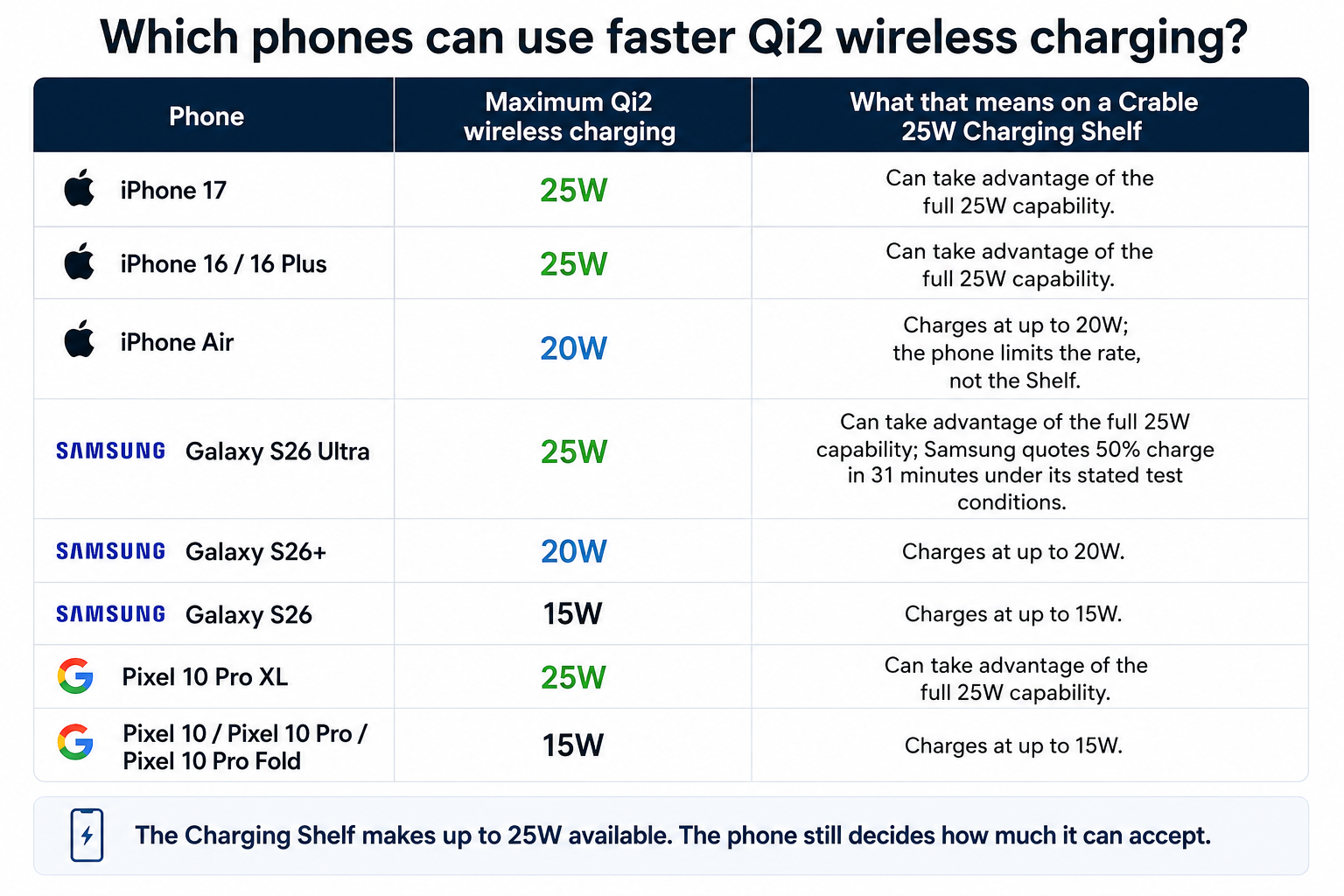
Charging speed can also vary with battery level, temperature, alignment, case design and other conditions, so these figures should be treated as maximum supported rates rather than a guarantee that every phone will draw its maximum power continuously.
The magnets matter too
There is another important improvement in Qi2 25W that you can actually feel when you use it: magnets.
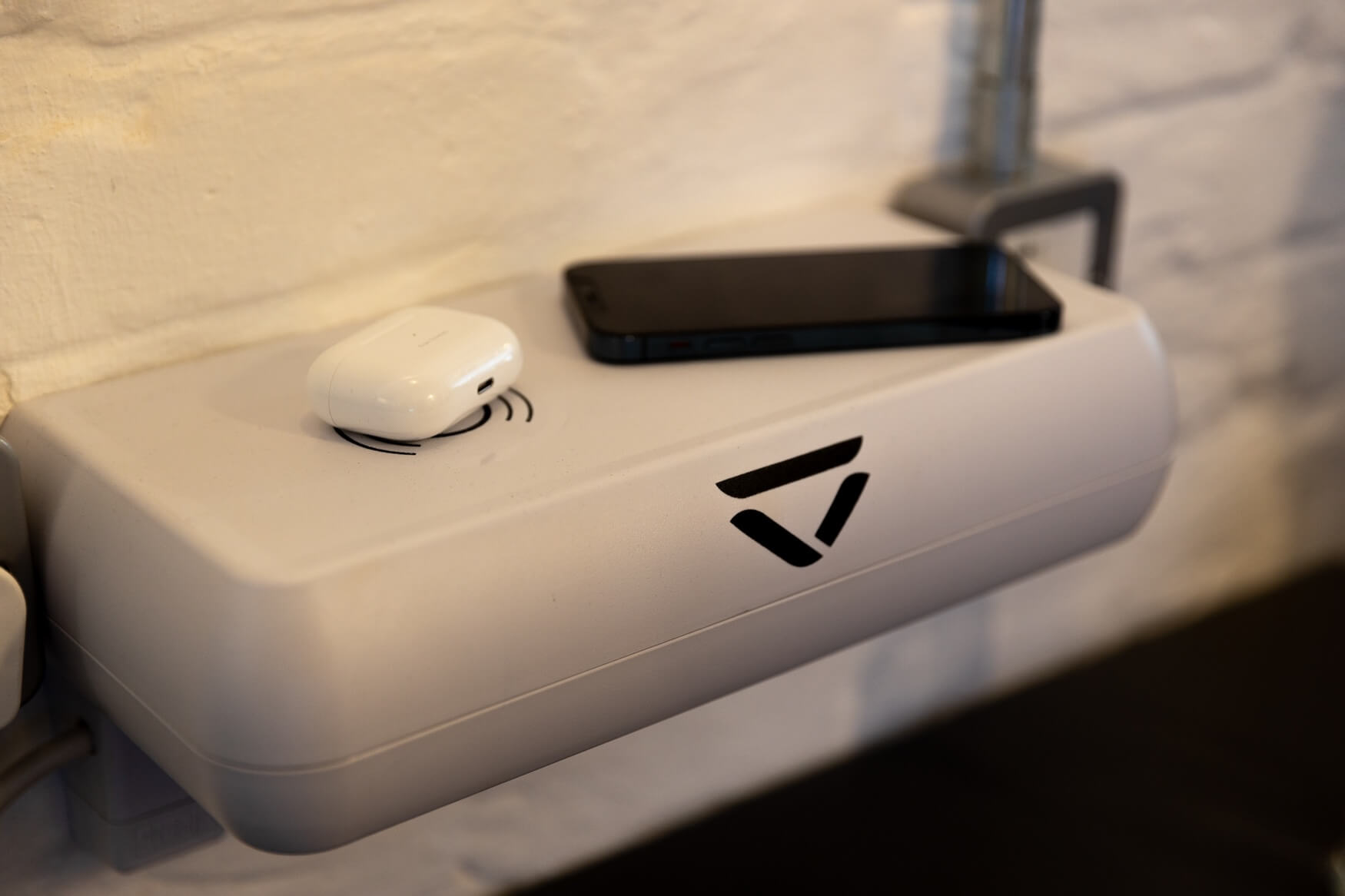
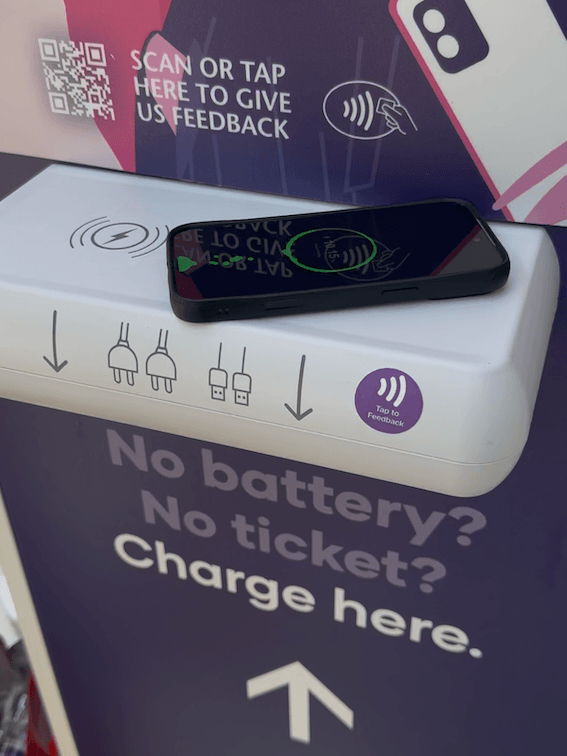
Apple users will already be familiar with the idea through MagSafe. In the Qi2 25W standard, it's called the Magnetic Power Profile (MPP), a technology based on MagSafe that Apple contributed to the Wireless Power Consortium. A ring of magnets helps align a compatible phone with the charging coil rather than relying on you to put the phone in exactly the right place.
That alignment matters. Wireless charging works best when the charging coil in the phone is properly positioned over the coil in the charger, so getting the two neatly lined up helps make charging more efficient and reliable. With a compatible phone or magnetic case, you'll feel the magnets guide the phone into position — and with the right combination of phone and case, it can give that rather satisfying snap into place familiar to MagSafe users.
It's a small detail with a very practical purpose: put the phone down, let the magnets help find the right position, and get on with charging it.
The phone is still the boss
This is probably the single most important technical point in the article. Putting a phone onto a 25W Charging Shelf does not guarantee that 25W will go into it. The charger makes power available; the phone decides how much power it is prepared to receive.
A handset designed for a lower wireless charging rate will charge at that lower rate. A compatible phone capable of receiving substantially more can take advantage of the additional power available. Battery temperature, battery level, alignment, the phone case and numerous other factors can affect the eventual charging rate too.
We’ve gone much deeper into this subject in Why Is My Phone Charging Slowly?, where we look at the surprisingly large number of things capable of stealing charging performance. It’s well worth reading if you’ve ever seen the charging symbol appear on your phone and then wondered why almost nothing seems to be happening.
For somebody specifying public Charging Stations, however, the reassurance is much simpler:
The phone decides how much power it can accept. Our job is to make sure the Charging Shelf has enough power available to give it what it needs.
That’s an important distinction. We can’t promise that every visitor’s phone will receive 25W because that simply isn’t how charging works. What we can do is ensure that Crable Charging Shelves aren’t unnecessarily limiting the charging capability of the increasingly powerful phones being placed on them.
One Charging Shelf, lots of places to need it
The Crable Charging Shelf is a Charging Station in its own right, but it’s also the charging engine at the heart of some of our larger Charging Stations. You’ll find Charging Shelves incorporated into our Charging Totems, and soon they’ll feature in our new Charging Posts too.
Watch this space on that one.
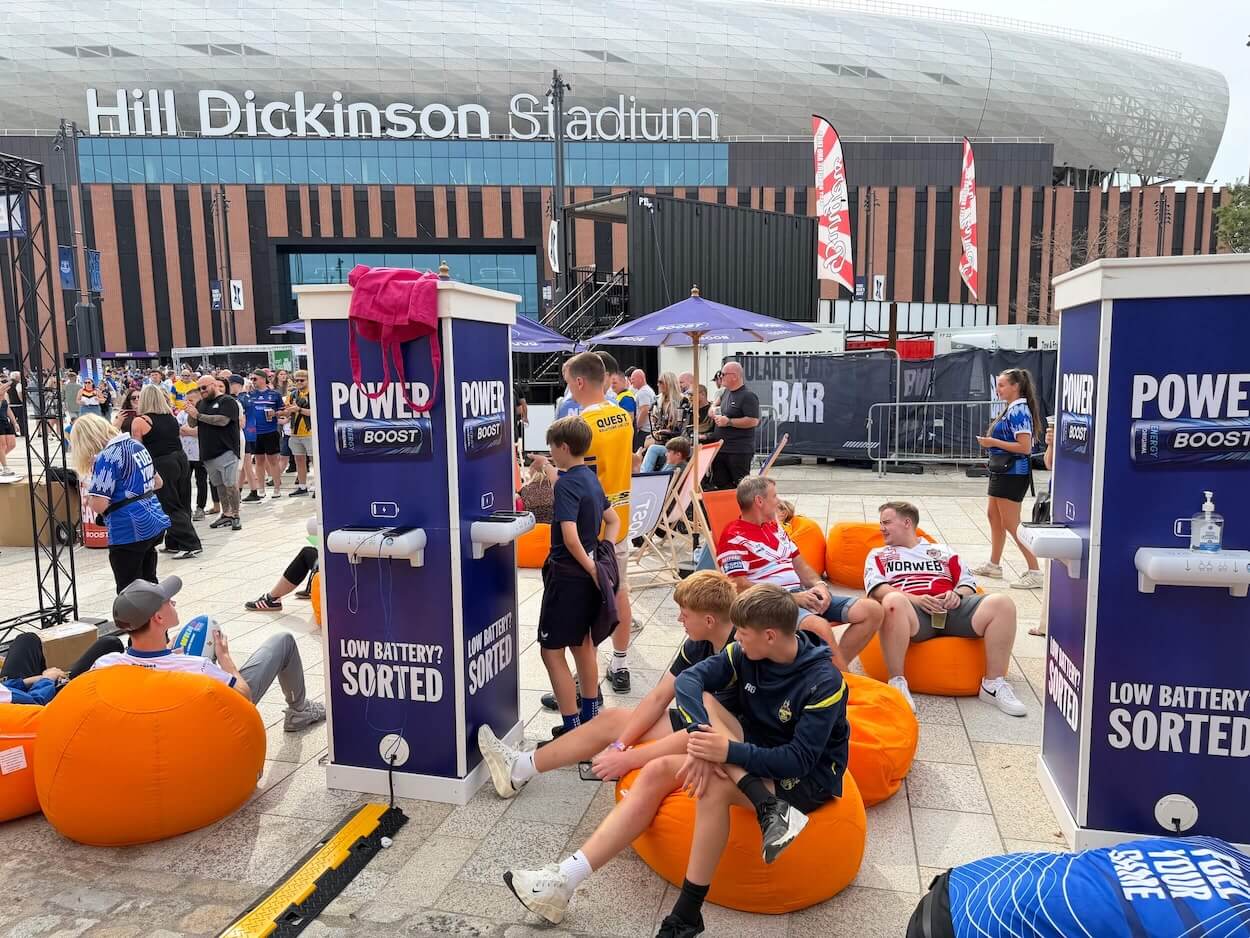
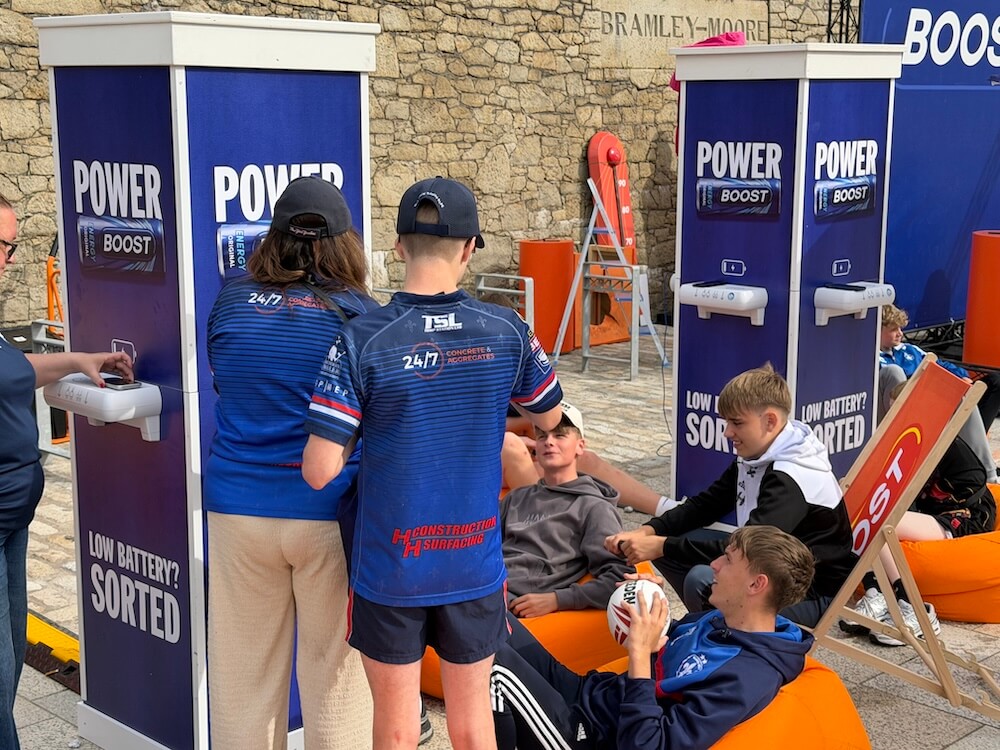
That means the move to 25W has applications right across the environments in which Crable operates. In transport environments, five minutes of charging might keep a digital ticket or boarding pass alive. In healthcare, reliable charging can keep patients and visitors connected during an unexpectedly long day. At stadiums and arenas, phones now carry tickets, payments, photographs, messages and the means of getting home. At events and festivals, a quick top-up between sessions can make an enormous difference.
The same argument applies across retail, hospitality, education, workplaces, visitor attractions and public spaces. Phones have quietly become our wallets, tickets, maps, cameras and communication devices, so a dead battery is no longer merely an inconvenience. Providing somewhere convenient to charge has become a genuine part of looking after customers, visitors, passengers, patients, employees and guests.
More charging power. Still a tiny amount of electricity.
There is another pleasing thing about making phone charging faster: the amount of electricity involved remains remarkably small.
We’ve already done the maths in What Does Free Phone Charging Cost in 2026?. A smartphone battery stores a tiny amount of energy compared with most of the electrical equipment surrounding us in a commercial building, which means providing useful free charging at scale can cost surprisingly little in electricity.
So faster charging isn’t really about consuming lots more energy. It’s about making the charging opportunity more useful. If somebody only has five minutes, we’d rather their phone receive as much useful charge as it is safely capable of accepting during those five minutes.
25W wireless charging is becoming standard
So yes, we’re very excited about this one. 25W Qi2 wireless charging is becoming standard in new Crable Charging Shelves, including those incorporated into our Charging Totems and forthcoming Charging Posts. It will be standard across new purchases and long-term rentals, while our short-term hire fleet will transition to 25W progressively.
We started at 5W in 2018 and moved to 15W when phones and wireless charging technology were ready for it. We’ve spent more than five years providing that level of fast wireless charging in demanding commercial environments. Now phones can do more, the technology is ready and reliable, and we’re moving forward again.
5W in 2018. Then 15W. Now 25W. As soon as better charging technology is genuinely ready for the real world, we want it in a Crable Charging Shelf.
Because when somebody has five minutes before their train departs and their ticket is sitting on a phone with a dying battery, excellent charging infrastructure stops being a specification on a datasheet. It becomes extremely useful.
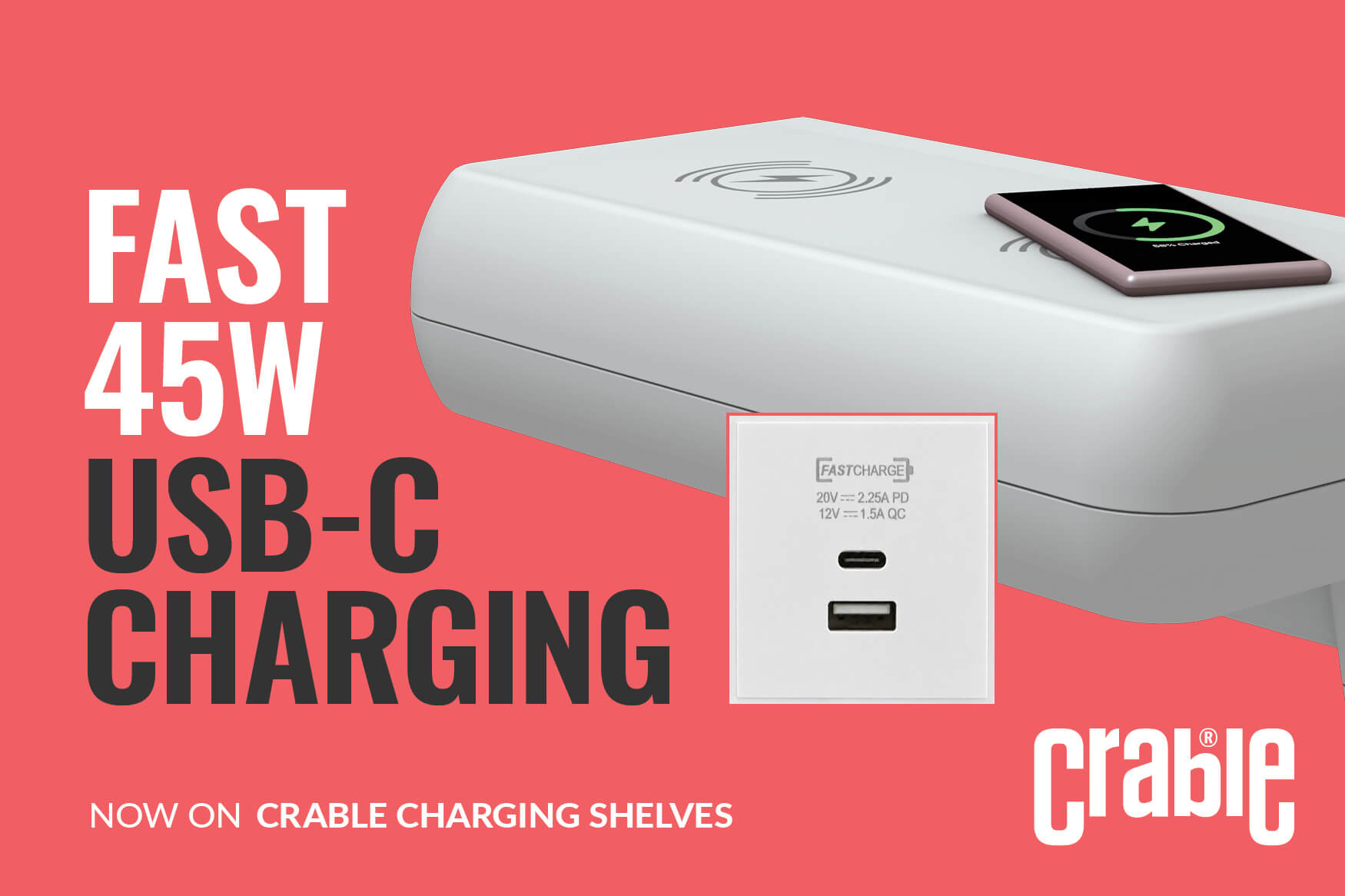
And we’re not finished. While we’ve been increasing wireless charging to 25W, we’ve also been doing something rather interesting at the other end of the cable. Our new 45W USB-A & USB-C charging modules have arrived too.
More on that next.


Join our mailing list
Sign up to our mailing list to be informed of relevant updates and insights from Crable.