Interview multiple candidates
Lorem ipsum dolor sit amet, consectetur adipiscing elit proin mi pellentesque lorem turpis feugiat non sed sed sed aliquam lectus sodales gravida turpis maassa odio faucibus accumsan turpis nulla tellus purus ut cursus lorem in pellentesque risus turpis eget quam eu nunc sed diam.
Search for the right experience
Lorem ipsum dolor sit amet, consectetur adipiscing elit proin mi pellentesque lorem turpis feugiat non sed sed sed aliquam lectus sodales gravida turpis maassa odio.
- Lorem ipsum dolor sit amet, consectetur adipiscing elit.
- Porttitor nibh est vulputate vitae sem vitae.
- Netus vestibulum dignissim scelerisque vitae.
- Amet tellus nisl risus lorem vulputate velit eget.
Ask for past work examples & results
Lorem ipsum dolor sit amet, consectetur adipiscing elit consectetur in proin mattis enim posuere maecenas non magna mauris, feugiat montes, porttitor eget nulla id id.
- Lorem ipsum dolor sit amet, consectetur adipiscing elit.
- Netus vestibulum dignissim scelerisque vitae.
- Porttitor nibh est vulputate vitae sem vitae.
- Amet tellus nisl risus lorem vulputate velit eget.
Vet candidates & ask for past references before hiring
Lorem ipsum dolor sit amet, consectetur adipiscing elit ut suspendisse convallis enim tincidunt nunc condimentum facilisi accumsan tempor donec dolor malesuada vestibulum in sed sed morbi accumsan tristique turpis vivamus non velit euismod.
“Lorem ipsum dolor sit amet, consectetur adipiscing elit nunc gravida purus urna, ipsum eu morbi in enim”
Once you hire them, give them access for all tools & resources for success
Lorem ipsum dolor sit amet, consectetur adipiscing elit ut suspendisse convallis enim tincidunt nunc condimentum facilisi accumsan tempor donec dolor malesuada vestibulum in sed sed morbi accumsan tristique turpis vivamus non velit euismod.
Introduction
Most people think they understand phone charging.
After all, we've been charging mobile phones for decades. You plug the phone in, the battery goes up and everybody gets on with their day. Except that isn't really what's happening. Somewhere between the charger, the cable and the battery sits an astonishing amount of misunderstanding.
They'll happily debate camera specifications, processor speeds and screen quality but ask how fast their phone is actually charging and most respond with little more than a blank expression.
Which is a shame because charging is one of the few things we all do every single day. And when it doesn't behave as expected, otherwise rational adults start behaving rather differently. The battery is sitting at 12%. The charger has been connected for ten minutes. The battery still says 12%. You check again. Still 12%. You move the cable, reposition the phone, glare at the charger and begin questioning the laws of physics.
Eventually somebody reaches the only conclusion available to them.
"The charger's rubbish." Perhaps.
But charging a phone is rather like solving a murder mystery. There are ten suspects. The charger is only one of them. Before we blame the butler, let's examine the evidence.
The Average Phone
Before we start hunting thieves, we need a victim.
Not your phone, specifically, because I don't know what's in your pocket. It could be a brand-new flagship, a four-year-old survivor or something currently being held together by a cracked screen protector and blind optimism.
Instead, let's imagine the average phone.
People now keep their smartphones for roughly four years before replacing them. That's a far cry from the annual upgrade frenzy of a decade ago, when otherwise sensible adults queued overnight to buy a phone that was essentially the same as the one they already owned but available in a slightly different shade of grey.
If phones are being kept for four years on average, it seems reasonable to assume the average phone in use today is around two years old. That matters because batteries age, charging standards evolve, wireless charging improves and software changes. What your phone was capable of on launch day and what it is capable of today may not be exactly the same thing.
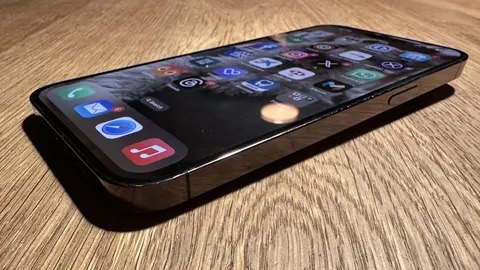
For the rest of this guide we're therefore going to assume our test subject is a typical two-year-old smartphone sitting at 10% battery. Why 10%? Because that's roughly the point where people stop saying, "I should probably charge my phone soon," and start behaving as though a national emergency has been declared. There is even a name for the anxiety many people feel when battery levels start falling: nomophobia.
We'll also assume that phone is capable of receiving a healthy 15W wireless charge. Not because every phone can but because 15W has become a useful benchmark. It's fast enough to be genuinely useful, common enough to be relevant and easy enough to compare against when things go wrong.
In other words, our average phone isn't new, old or particularly special. It's simply representative of the millions of phones currently sitting in pockets, handbags, cup holders and beside beds throughout the country. And if that average phone isn't receiving something close to the charging performance it should be, one of our ten thieves is probably lurking nearby.
Why We Keep Talking About 15W
If you've spent any time looking at phone chargers, you'll have noticed that the numbers get very large very quickly. Five watts. Fifteen watts. Twenty-five watts. Fifty watts. One hundred watts. Before long it starts to feel less like buying a charger and more like shopping for a pressure washer.
For the purposes of this guide, however, we're going to keep coming back to one number:15W. The reason is simple. Fifteen watts is where wireless charging stops being a novelty and starts being genuinely useful. Plug your average two-year-old phone in at around 10% battery and a healthy 15W charge can often deliver several percentage points of battery life in just a few minutes. Enough to notice, enough to make a difference and enough to rescue a journey, a meeting, a train ticket, or a digital boarding pass.
Five watts is a rather different experience. Five watts will eventually get the job done in much the same way a garden hose will eventually fill a swimming pool. The question is whether you’re still interested by the time it does. This is why so many people become frustrated with phone charging. They think they're receiving one thing whilst actually receiving something quite different.
A charger capable of delivering 5W isn't broken. A phone receiving 5W isn't necessarily faulty. A cable carrying 5W isn't automatically damaged. The problem is often expectation. You expected 15W and got 5W. Whilst both numbers result in a charging battery, they produce very different experiences. The difference between 5W and 15W isn't simply three times more power. It's the difference between noticing and not noticing. It's the difference between plugging in for twenty minutes and feeling pleased with yourself, or plugging in for twenty minutes and wondering whether anything happened at all.
Things become even more interesting once we move beyond 15W. Modern phones are increasingly capable of receiving 25W wireless charging under the right conditions, which is fantastic news provided everything else in the charging chain is up to the task. Because very soon we're going to stop talking about chargers and start talking about thieves. After all, there's little point having 15W available if half of it disappears before it reaches the battery.
What Your Phone Can Actually Receive
One of the biggest mistakes people make when discussing charging is assuming every smartphone is broadly the same.
They're not.
A phone released in 2017 and a phone released in 2025 may look remarkably similar from the outside. Both have a screen. Both make calls. Both take photographs of meals that become increasingly less interesting to everybody else. Yet beneath the glass, they can have dramatically different charging capabilities.
This matters because charging is a conversation between two devices. The charger offers power and the phone decides what it wants. If either side of that conversation has limitations, the result is the same: slower charging.
Before we start investigating our ten thieves, it's therefore worth knowing what the device in your pocket is actually capable of receiving.
Why We're Using iPhones
Before Android owners start sharpening their pitchforks, a quick explanation. For the purposes of this article we're going to use the iPhone as our reference handset.
Not because every reader owns one, but because it's one of the most common smartphones and Apple has maintained a relatively clear charging journey from the iPhone 8 through to the latest models.
Using one family of phones allows us to compare almost a decade of charging development without disappearing down a rabbit hole of manufacturers, models and competing standards.
The lessons, however, apply to everybody.
iPhone Charging Capabilities
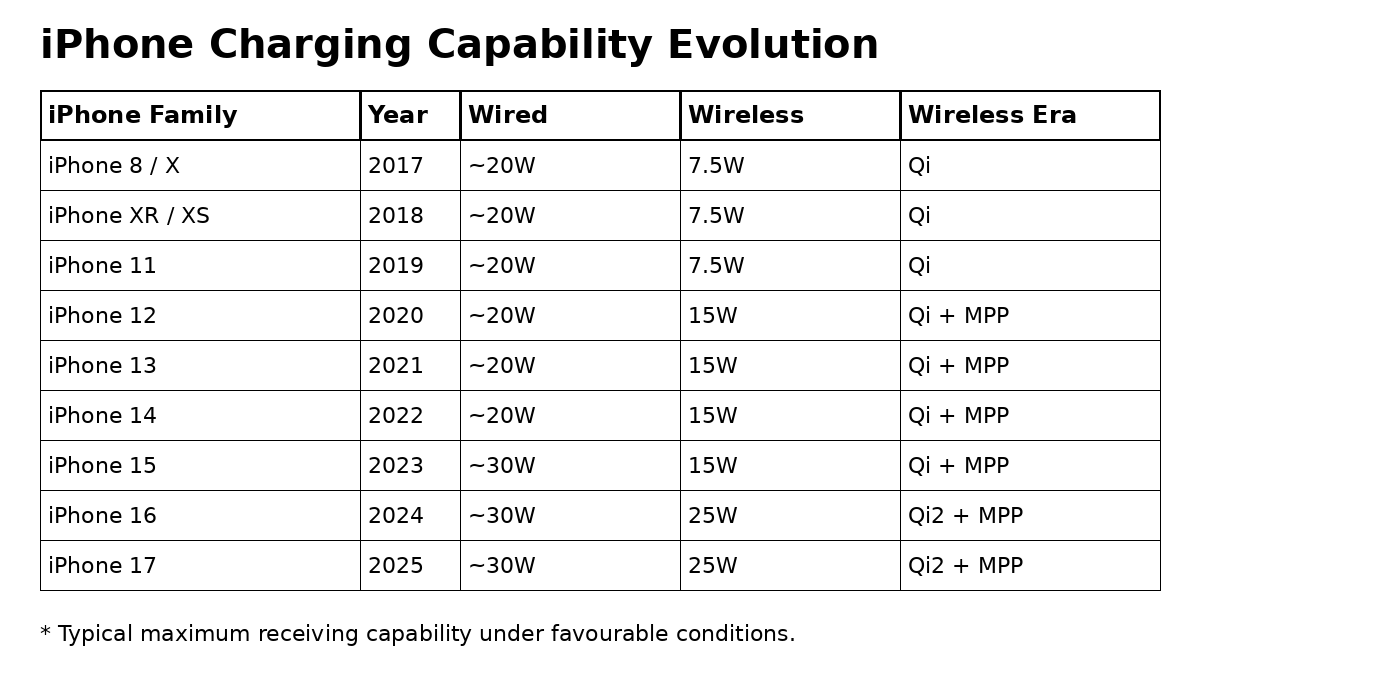
*Under favourable conditions. Actual charging performance depends on battery condition, charger capability, cable quality, temperature, alignment and several other factors discussed in this guide.
Looking at the table, one thing should already be obvious. The phone itself has a say in the matter. It always has. And that brings us to our first thief, and perhaps the biggest misunderstanding in the entire charging world.
Thief #1: Your Phone Is The Boss
Most people assume a charger decides how fast a phone charges. In reality, the phone decides how much power it is willing to accept. The charger merely makes power available. The phone decides whether to take it.
We're conditioned to think that more available power automatically means faster charging. If a charger can provide more power, surely the phone should charge faster. The reality is rather less democratic. The phone decides how much power it is willing to accept and simply ignores the rest.
The phone is in charge.
Modern smartphones constantly monitor battery temperature, battery condition, charge level, and a host of other variables before deciding how much power to request. Even if the charger is capable of delivering considerably more, the phone will only take what it believes is sensible at that moment.
It's also why charging speeds can change throughout a charging session. A battery sitting at10% is often far more enthusiastic than one sitting at 95%. One is still ordering another slice of pizza whilst the other is quietly loosening its belt and wondering whether it really needed dessert.
Fortunately, this behaviour is a feature rather than a flaw. Battery packs, car chargers and mains chargers are often capable of delivering far more power than a phone can safely use. Your phone's job is to protect the battery, manage heat and ensure charging remains safe. Left entirely to the charger, things could become rather more dangerous than most people would like.
This is why a 25W charger connected to a phone capable of receiving 15W will usually charge at around 15W. The charger may be willing. The phone simply isn't interested. It is also why a phone that happily accepts a healthy charge at 10% may become much more selective as the battery approaches full. The phone isn't being awkward. It's being responsible.
This matters because every other thief in this guide depends upon it. Before we blame the charger, the cable, the case or the charging pad, we must first accept a simple truth.
There may be enough power waiting outside to jump-start a car but your phone decides how much gets through the door. Expecting more because you really, really want it is a strategy generally abandoned shortly after primary school.
Thief #2: Your Charger Is The Worker
Now that we've established your phone is the boss, it's time to talk about the worker. Whilst the charger isn't in charge, it still has an important role to play. Its job is to take electricity from the wall, car or battery pack, convert it into something your phone can safely use and then make enough of it available when requested.
If your phone wants 15W and the charger can only provide 5W, the discussion is over before it begins. The phone may be perfectly willing to receive more but the charger simply hasn't got it to give.
The easiest way to understand a charger's capability is through a simple equation: Watts =Volts x Amps. You don't need to memorise it and there won't be a test afterwards, but it does explain why chargers have all those tiny numbers printed on them.
A charger labelled 5V / 1A can typically provide around 5W. Increase the current to 2A, and you have roughly 10W. Increase it again to 3A and you arrive at around 15W. The numbers printed on chargers suddenly become rather more interesting because they're no longer random. They're telling you what the charger is actually capable of supplying.
In fact, one of the easiest charging investigations you can perform today is to look at the USB ports in your car. Many manufacturers print the voltage and current rating directly beside the socket. Once you know that volts multiplied by amps equals watts, you'll start spotting charging limitations everywhere.
One of the stranger things about modern charging is that many people still assume wireless charging must automatically be slower than using a cable. That was certainly true for years. It is becoming steadily less true with every new generation of phones and chargers.
A modern wireless charger capable of delivering 15W or 25W may comfortably outperform an ageing USB-A port delivering 5W through a dashboard designed when Angry Birds was still a cultural phenomenon.
Having plenty of power available doesn't guarantee you'll receive it. As we've already learned, the phone still decides what it wants. Starting with a charger that can only provide 5W, however, leaves very little room for improvement.
Power can’t arrive if it was never sent.
Before power from the charger reaches the phone, though, it still has to travel through something else. Something most people barely think about until it stops working.
The cable.
Thief #3: The Cable
Of all the components involved in charging a phone, the cable is probably the most misunderstood. Most people buy charging cables in much the same way they buyshoelaces. If it fits the hole and comes in a colour they like, the job is done.
Unfortunately, charging cables are carrying power rather than holding your trainers on.
From the outside, two cables can look almost identical. One may be perfectly capable of carrying the power your phone wants. The other may be the electrical equivalent of trying to drink a milkshake through a shoelace. Both technically connect two things. The similarity largely ends there.
This matters because the cable sits directly between the worker and the boss. The charger may have plenty of power available and the phone may be perfectly happy to receive it but every watt still has to travel through the cable first.
One of the sneakiest things about charging is that your phone rarely tells you how well it's charging. It simply tells you that charging is taking place.
Your phone may be perfectly happy to receive 25W and your charger may be perfectly capable of supplying it. Unfortunately, the ageing cable between them has spent years being folded, stretched, trapped in drawers, sat on, wrapped around chargers. It can now transfer only a fraction of the power available to it.
Your phone still displays the reassuring charging symbol. Technically, it isn't lying. The battery is receiving power. It just isn't receiving very much.
In extreme cases, it is entirely possible for 24 of your available 25 watts to disappear before they ever reach the battery, leaving you staring at a charging icon and wondering why absolutely nothing seems to be happening.
A charging icon is not a charging speed.

Hidden beneath the plastic jacket are conductors responsible for carrying power from one end of the cable to the other. Bend them sharply enough, often enough, and eventually they begin to fail. Not dramatically. Not all at once. Just enough to gradually become a problem.
This is one reason good charging habits matter. Curling a cable into gentle loops places far less strain on it than repeatedly folding it into tight angles. The difference may seem trivial but charging cables live surprisingly hard lives and small acts of abuse have a habit of accumulating over time.
Cable manufacturers use a measurement called AWG (American Wire Gauge) to describe the thickness of the conductors hidden inside. Rather confusingly, smaller AWG numbers generally mean thicker conductors. It's one of those engineering decisions that made perfect sense to somebody at the time and has confused everybody else ever since.
Top Tip: As a rule of thumb, a reputable cable manufacturer that publishes AWG specifications on packaging is usually a better sign than one that doesn't tell you anything at all.
The solution isn't necessarily to buy the most expensive cable you can find. It's to buy one that's suitable for what you're asking it to do and then look after it. People routinely spend hundreds of pounds on smartphones and then treat the cable responsible for charging them as a disposable afterthought. It's an odd habit when you think about it.
If your charging cable was won at a fairground, there's a reasonable chance it's now the weakest link in the entire charging chain. It may look the business but underneath it could be running on hopes, dreams and surprisingly little copper.
Even a perfect cable doesn't guarantee perfect charging. The phone still has plenty of opinions of its own.
Thief #4: Your Battery Percentage
One of the most confusing things about phone charging is that charging speed isn't constant. Most of us assume that if a phone can charge at 15W, 25W or 45W then it will do so from empty to full.
It doesn't.
Phones generally charge fastest when the battery is relatively empty. As the battery percentage rises, charging speed gradually reduces. By the time the battery approaches100%, the phone becomes increasingly cautious.
We all want Usain Bolt sprinting flat out over the finish line. What we actually get is a train easing into a platform with painstaking precision.
This isn't a fault. It's a deliberate attempt to protect battery health. The closer the battery gets to being full, the more carefully the phone manages the charging process.
Charging creates heat, and heat is one of the things the phone is constantly trying to manage. The result is a balancing act. The phone wants to charge quickly, but it would also quite like to avoid cooking its own battery in the process.
If you've ever watched a phone race from20% to 70% and then seemingly lose all enthusiasm somewhere in the high nineties, you've witnessed this behaviour first-hand.
The closer a battery gets to full, the more cautious it becomes.
This is another example of the phone remaining firmly in charge. Earlier in this guide, we learned that the phone decides how much power it is willing to accept. A charger may be perfectly capable of delivering more power but the phone may have other ideas.
The final few percent aren't slow because something is wrong. They're slow because your phone would quite like the battery to remain healthy enough to be useful next year as well.
Thief #5: Temperature
Whilst charging a phone halfway up a mountain in sub-zero temperatures presents its own challenges, most charging performance crimes are committed by heat.
Most people have experienced it without necessarily recognising it. A phone left on a sunny dashboard. A phone running satellite navigation for hours. A phone charging whilst simultaneously streaming video, playing games or doing a dozen other things at once. Sometimes the culprit is simply a pocket.
Smartphones spend much of their lives tucked away in pockets, handbags and other places that are excellent for carrying them but not especially good for cooling them down. They're also remarkably good at trapping heat. In fairness, most pockets receive remarkably little maintenance. The contents are emptied occasionally, but the pockets themselves are often left to fend for themselves. Turning them inside out before washing a pair of trousers is probably good advice for both the trousers and the charging port.
Heat matters because batteries don't particularly enjoy it. If a battery becomes too warm, the phone may deliberately reduce charging speed to protect battery health. This can feel frustrating in the moment but it is usually a sign that the phone is doing exactly what it was designed to do.
The important thing to understand is that this behaviour is often invisible. The phone still says it's charging. The charger is still connected. Everything appears normal. Meanwhile, the phone has quietly decided that preserving battery health is more important than chasing maximum charging speed.
Heat makes your phone choose caution over speed.
This is simply another example of the phone making decisions on its own terms. Temperature is one of the factors influencing that decision. A charger may be perfectly capable of delivering more power but the phone may have no interest in receiving it.
If your phone is too hot, it will often choose caution over speed. Annoying? Occasionally.Sensible? Almost always.
And older batteries tend to make that caution even more pronounced.
Thief #6: Your Battery Has Stopped Chasing PBs
One of the most misunderstood things about smartphones is that batteries are consumable. We happily accept that tyres wear out, brake pads wear out and running shoes wear out. For some reason, however, we expect batteries to remain permanently youthful despite being charged and discharged every day for years on end.
The problem is that most batteries are judged against an impossible standard: themselves five years ago.
We routinely expect ageing batteries to perform exactly as they did on the day they left the factory. When they don't, we assume something must be wrong.
Usually, nothing is wrong at all.
Every time a battery is charged and discharged, tiny chemical changes occur inside it. Individually, they're insignificant. Collectively, they add up. After hundreds of thousands of charge cycles, the battery is still perfectly capable of doing its job. It simply approaches that job with a little less enthusiasm than it once did.
This affects more than just battery life. Charging behaviour often changes too. Heat becomes a greater concern, efficiency can decline and manufacturers become increasingly cautious about how aggressively power is delivered. Modern phones would rather charge a little more slowly than risk damaging a battery that's already given years of faithful service.
The challenge is that the change is gradual. Nobody wakes up one morning to discover their battery has suddenly become old. Instead, charging takes a little longer. The battery percentage falls a little faster. A day that once ended comfortably with 30% remaining now finishes with an anxious search for a charger somewhere around teatime. That's not failure. It's wear.
Batteries age. Expectations rarely do.
If your battery has survived five years of daily charging, don't be surprised if it's less interested in chasing PBs and more interested in simply getting there in one piece. Frankly, most of us have.
Thief #7: The Case
Cases are wonderful things. They protect phones from gravity, pavements, kitchen floors and moments of misplaced confidence. Most modern smartphones spend their entire lives inside one and are probably better off for it.
The challenge is that wireless charging has to work through the case before it can reach the phone. Sometimes that's barely noticeable. Sometimes it isn't.
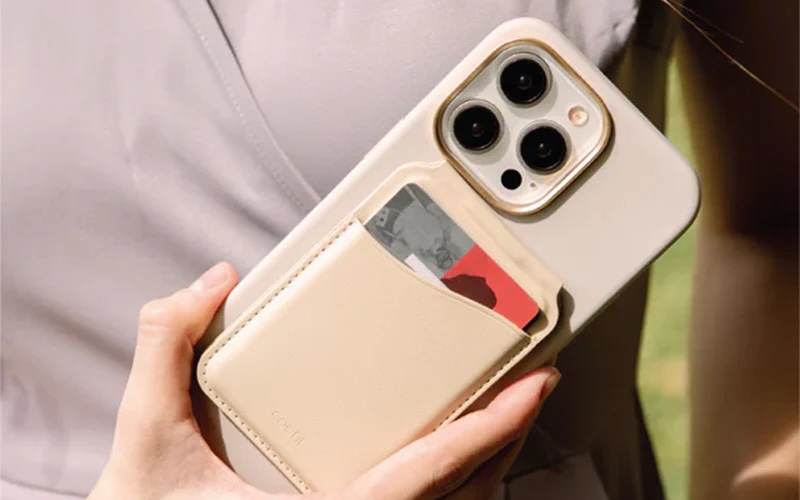
Wireless charging works by transferring energy across a small gap between the charger and the phone. Every extra millimetre added to that journey makes the job slightly harder. Some cases have almost no effect at all whilst others can become surprisingly enthusiastic participants in the charging process.
During testing for this article, an iPhone 17 Pro Max placed on the same wireless charger received around 30W without a case fitted and around 11W with the case installed. In other words, roughly 19 watts disappeared and charging performance fell by around 65%. Same phone. Same charger. Same location.Different result.
For the avoidance of doubt, the case was empty. No credit cards. No loyalty cards. No folded receipts. No Post-it note containing a bank card PIN and several life decisions.
Your results may differ. The point is that cases matter.
Wireless charging works through your case, not around it.
The reason this often goes unnoticed is that the phone still says it's charging. The familiar symbol appears on screen and everything looks perfectly normal. Meanwhile, a meaningful chunk of charging performance may have quietly wandered off elsewhere.
This doesn't mean you should throw your case in the nearest bin. Far from it. A cracked screen is usually far more expensive and inconvenient than slightly slower charging. It simply means your case has become part of the charging system, whether you intended it to or not.
A phone case is designed to protect your phone. Wireless charging simply has to work with whatever protection you've chosen.
The next thief takes this idea a step further. Even if your case isn't causing problems, wireless charging still relies on one thing above all else: getting everything lined up properly.
Thief #8: Alignment
Wireless charging sounds simple. Put phone on charger. Walk away. Return later to a fully charged battery.
Unfortunately, wireless charging has a slightly different view of what constitutes "on the charger".
Most people simply put the phone somewhere near the charger and hope for the best. After a reassuring chime is heard, a charging symbol appears on screen and everyone assumes the job has been done properly.
Wireless charging is surprisingly forgiving. You can place a phone noticeably off-centre, hear the familiar charging chime and see the charging symbol appear. The phone is charging. The question is how well.
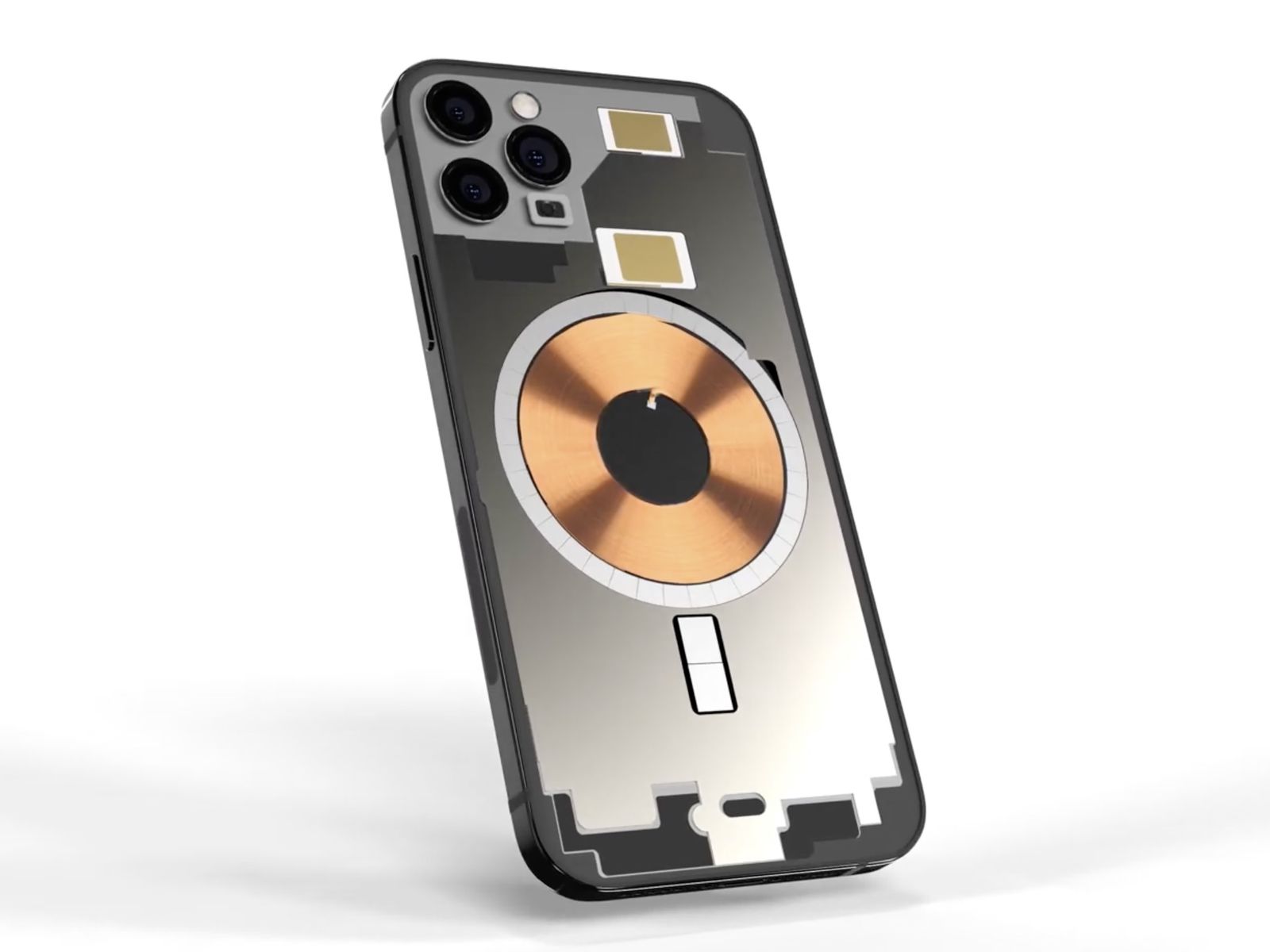
Inside both the phone and the charger are coils responsible for transferring energy wirelessly. They work best when positioned directly opposite one another. The further they drift apart, the harder the job becomes.
The good news is that alignment isn't mysterious. On modern iPhones, the charging coil sits roughly in the centre of the back of the phone. Most wireless chargers are kind enough to place a charging symbol, circle or target in the centre of the charging surface. Your objective is simply to place the centre of one over the centre of the other.
The charging chime confirms charging. It doesn't confirm good charging.
One of the reasons magnetic wireless charging has become so popular is that it makes alignment dramatically easier. Instead of carefully positioning the phone every time, the magnets help pull everything into place. There's often a satisfying little snap as the phone finds the correct position, followed by the familiar charging chime a moment later.
It's one of the few occasions in life where hearing a snap immediately followed by a ping is considered a good outcome.
Without that magnetic assistance, however, it's usually worth taking a second or two to be as accurate as possible. Wireless charging can be charging brilliantly, charging poorly or charging somewhere in between whilst displaying exactly the same symbol on screen.
Taking a few extra seconds to align things properly can pay back minutes later. Once you've done it, resist the urge to keep nudging, repositioning and checking every few moments. The grown-up approach is surprisingly simple: position it carefully, trust your work and let it get on with the job.
Of course, not every charging problem is wireless. Sometimes the issue is far simpler.
Thief #9: Pocket Gunk
Smartphones spend a surprising amount of their lives in pockets, handbags and the bottoms of rucksacks. This sounds perfectly sensible until you stop and consider what else lives there.
Dust, lint, fluff, crumbs and other mysterious substances we're all happier not thinking about too closely.
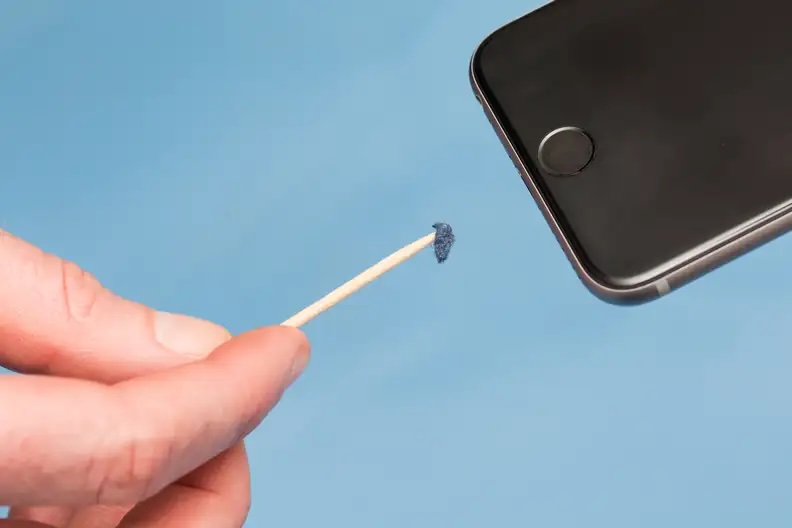
Every trip into a pocket pushes a tiny amount of that material towards the bottom of the charging port. Over weeks and months it becomes compressed into something far more solid than you'd imagine. What begins as harmless fluff gradually turns into a compacted plug capable of preventing a charging cable from connecting properly.
The symptoms are surprisingly familiar. The cable no longer clicks firmly into place. Charging starts and stops unexpectedly. The connection feels loose. Eventually you find yourself holding the cable at a very particular angle whilst convincing yourself the charger must be broken.
Often, it isn't.
A blocked charging port isn’t necessarily a broken one.
Before buying a new charger, a new cable or questioning your life choices, spend ten seconds looking inside the charging port. A torch will often reveal more than you'd expect and a wooden toothpick (used very carefully) can sometimes solve a problem that seemed destined to cost money.
Smartphones are remarkable pieces of engineering containing advanced processors, high-resolution cameras and astonishing amounts of computing power. It's therefore slightly humbling that one of the most common charging problems can be caused by the contents of your pocket.
Thief #10: You're Running The Bath With The Plug Out
One of the most frustrating charging experiences is watching a phone remain attached to a charger whilst the battery percentage barely moves. Most people assume something must be wrong with the charger.
In reality, modern smartphones do a lot of things at once. Navigation, video calls, streaming, gaming, searching for mobile signal and hunting for Wi-Fi networks all require power.
Receiving power and storing power are not the same thing.
It's a bit like running a bath with the plug out. The water is arriving perfectly well. It's just got somewhere else to be.
The size of the plug hole isn't fixed either. Start using navigation, increase screen brightness, begin a video call or move into an area with poor mobile signal and the hole effectively gets bigger. If enough water is escaping, the bath may fill very slowly or not at all.
This is another example of why the charging symbol can be misleading. The phone may genuinely be charging whilst using power just as quickly as it arrives. In some situations, the battery percentage may even continue to fall despite being connected to a charger.
If your battery percentage is falling whilst plugged in, don't immediately blame the charger. The charger may be doing exactly what it should be doing. The phone has simply found even more things to do with the power.
Conclusion
For years I blamed chargers for almost every disappointing charging experience. If a battery wasn't filling quickly enough, it was the charger's fault. If the phone was still half-flat after a journey, it was the charger's fault. If charging felt slower than I thought it should, once again, it was clearly the charger's fault.
It turns out chargers have been taking the blame for a remarkable number of crimes they didn't commit.
The reality is that charging is rarely as simple as it looks. A modern smartphone is constantly making decisions about battery health, temperature and power consumption whilst communicating with a charger through a cable that may or may not be helping matters. Add a phone case, a wireless charger, a battery that's no longer in the first flush of youth and perhaps a charging port that's quietly cultivating its own ecosystem, and it becomes easier to understand why charging performance doesn't always match expectations.
The encouraging part is that most charging problems are neither mysterious nor expensive. A surprising number can be solved by cleaning something, replacing something, aligning something properly or simply understanding what the phone is trying to do. Even when the solution is "nothing is wrong", it's often reassuring to know why a phone is behaving the way it is.
The next time charging feels unusually slow, you'll probably find yourself looking at the entire charging chain rather than immediately blaming the nearest plug socket. That's no bad thing. Most tools work better once you understand what they're designed to do.
Unfortunately, this also means you'll never look at a charging cable in quite the same way again.
For Readers Who Enjoy This Sort Of Thing
Wireless charging standards are developed by the Wireless Power Consortium (WPC), the organisation behind the Qi charging standard used by most modern smartphones.
Think of Qi as the rulebook. It helps chargers and phones made by different manufacturers communicate with one another.
More recently, Qi2 introduced magnetic alignment through something called the Magnetic Power Profile (MPP) to help phones sit in the correct position on wireless chargers. In simple terms, the industry recognised that people aren't always brilliant at placing phones accurately, so magnets were recruited to help.
If we dramatically oversimplify things, wireless charging has broadly evolved from around 7.5W in the early Qi era, to around 15W with Qi + MPP, and now up to around 25W with Qi2 + MPP.
The important point is that charging specifications are potential rather than promises. A phone capable of receiving 25W can still charge much more slowly if the battery is hot, the case is too thick, the alignment is poor or any of our other thieves decide to get involved.


Join our mailing list
Sign up to our mailing list to be informed of relevant updates and insights from Crable.