Interview multiple candidates
Lorem ipsum dolor sit amet, consectetur adipiscing elit proin mi pellentesque lorem turpis feugiat non sed sed sed aliquam lectus sodales gravida turpis maassa odio faucibus accumsan turpis nulla tellus purus ut cursus lorem in pellentesque risus turpis eget quam eu nunc sed diam.
Search for the right experience
Lorem ipsum dolor sit amet, consectetur adipiscing elit proin mi pellentesque lorem turpis feugiat non sed sed sed aliquam lectus sodales gravida turpis maassa odio.
- Lorem ipsum dolor sit amet, consectetur adipiscing elit.
- Porttitor nibh est vulputate vitae sem vitae.
- Netus vestibulum dignissim scelerisque vitae.
- Amet tellus nisl risus lorem vulputate velit eget.
Ask for past work examples & results
Lorem ipsum dolor sit amet, consectetur adipiscing elit consectetur in proin mattis enim posuere maecenas non magna mauris, feugiat montes, porttitor eget nulla id id.
- Lorem ipsum dolor sit amet, consectetur adipiscing elit.
- Netus vestibulum dignissim scelerisque vitae.
- Porttitor nibh est vulputate vitae sem vitae.
- Amet tellus nisl risus lorem vulputate velit eget.
Vet candidates & ask for past references before hiring
Lorem ipsum dolor sit amet, consectetur adipiscing elit ut suspendisse convallis enim tincidunt nunc condimentum facilisi accumsan tempor donec dolor malesuada vestibulum in sed sed morbi accumsan tristique turpis vivamus non velit euismod.
“Lorem ipsum dolor sit amet, consectetur adipiscing elit nunc gravida purus urna, ipsum eu morbi in enim”
Once you hire them, give them access for all tools & resources for success
Lorem ipsum dolor sit amet, consectetur adipiscing elit ut suspendisse convallis enim tincidunt nunc condimentum facilisi accumsan tempor donec dolor malesuada vestibulum in sed sed morbi accumsan tristique turpis vivamus non velit euismod.
Stadiums have spent years transforming the digital fan experience, with tickets, payments, travel, club apps and communication increasingly running through the smartphone. Yet when that phone needs power, the solution can still be surprisingly improvised. Perhaps it is time to think more deliberately about what good charging provision actually looks like.
If a supporter asked a member of staff, “Where can I charge my phone?”, what would the answer be?
There probably is one. A socket somewhere on the concourse, perhaps. A USB point in hospitality. Maybe someone behind the bar will take pity on you and plug it in. All perfectly helpful when somebody is staring unhappily at 3% battery, but not quite the same thing as a stadium deliberately providing phone charging as part of the fan experience.
The fan experience has moved into our pockets
From the start of the 2026/27 season, digital ticketing is a mandatory Premier League requirement for existing clubs, with a two-year transition period for newly promoted clubs. Paper tickets, print-at-home tickets and plastic cards are steadily disappearing from a matchday experience increasingly built around the smartphone.
Rugby Union is moving quickly in the same direction. Harlequins has moved all men's and women's season and match tickets into its app for 2026/27, describing the change as part of its commitment to improving the matchday experience. Northampton Saints has moved season tickets onto supporters' phones this season while Bath Rugby introduced its new smartphone ticketing platform earlier this year.
Getting through the turnstile is only the start. The same phone may have planned the journey to the ground, paid for food and drink, helped find friends in a crowd, taken the photographs, followed the club's content and provided the train ticket home.
The ticket may get you into the stadium, but the phone's work is nowhere near finished.
None of this means stadiums should take responsibility for supporters who leave home with 11% battery and optimism. But when so much of the modern supporter experience has deliberately been built around a powered device, what happens when that device needs power becomes a perfectly reasonable fan experience question.
A spare socket isn't a charging strategy
Few stadiums would regard a spare router as their customer Wi-Fi strategy. So should the existence of an accessible plug socket automatically count as phone-charging provision?
This is where “dedicated” is a useful word, without needing to turn it into another industry category. Dedicated phone charging doesn't mean a particular piece of hardware. It means charging has been deliberately provided for the people using the stadium, somewhere they can reasonably find it and know it is there for them.
That could be an open charging station, a locker or a portable power bank. It could be wired or wireless, permanent or temporary, paid for by the supporter, funded by the stadium or supported by a sponsor.
Dedicated doesn't describe the hardware. It describes the intention.
Free doesn't define the solution
“Free phone charging” sounds straightforward until you consider how many different things it can mean. A stadium could make power-bank rental free, lend or give away power banks, provide charging lockers or install open charging stations. All are free to the supporter but they create quite different experiences.
Portable power banks have one advantage that is difficult to argue with: you can walk around with them. In hospitality that could be precisely the point. If you want guests circulating, networking and enjoying different areas of the stadium, tethering them to a charging point may rather defeat the object.
Open charging stations answer a different need. A supporter can connect their own phone, keep hold of it and get some power without collecting another device, setting up an account or remembering to return anything afterwards. There is no particular reason a large stadium couldn't use both approaches in different places.
The interesting question is less “Which charging solution should we buy?” and more “What will people actually do while they're charging?” If they naturally want to move, design for that. If they're happy to stop for a few minutes, think about where those few minutes would be most comfortably and usefully spent.

Sometimes you only need a boost
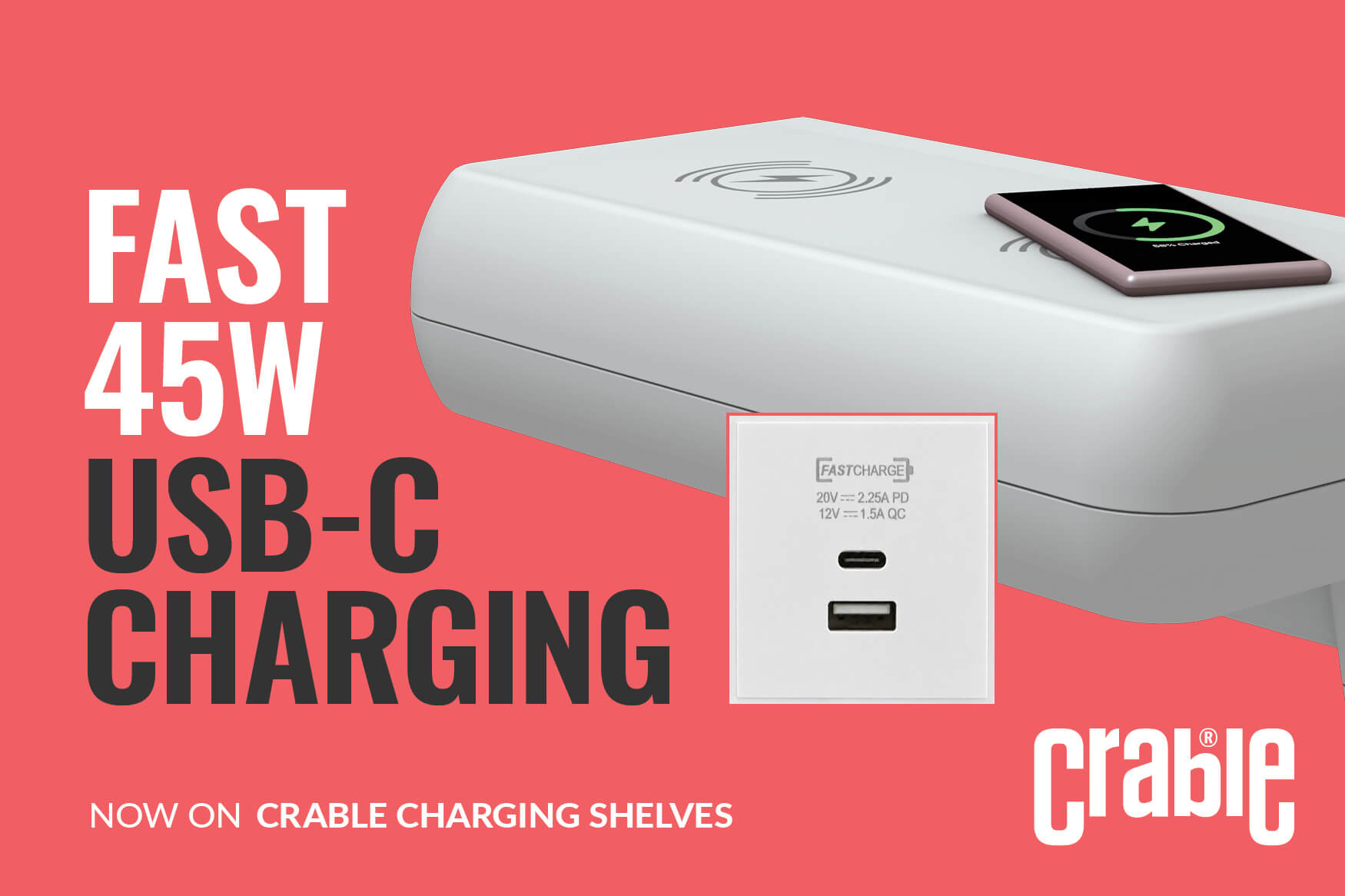
Capacity is an obvious consideration when specifying charging: how many people can use it at once? Less obvious is how long each of them may need to be there. Contemporary systems can now offer 45W USB-C and up to 25W wireless charging for compatible devices, alongside the USB charging people already know. Charging speed isn't simply a technical specification. To the supporter with a fading battery, it is part of the experience.
Not every phone will accept those charging rates and five minutes beside a charger won't produce a full battery. But a full battery often isn't the objective. Someone running low in the second half may just want enough power for the rest of the match, a few messages, their train ticket and the journey home. Sometimes that means taking a portable power bank with them; sometimes all they need is quick access to power.
And if people are going to stop for those few minutes, the location matters. Can they still see a screen and follow what's happening elsewhere? Can they stand comfortably with a drink? Can other supporters approach without blocking a concourse or getting in everybody else's way? A charging point can become a useful meeting place, carry club or sponsor communications or simply occupy a space where people naturally want to spend a little time.
The number of charging ports matters. So does the experience of using them.
One thing stadium operators probably don't need to lose much sleep over is the electricity. Our 2026 calculations put a typical 15-minute top-up at less than one tenth of a penny. On the same assumptions, even if half the crowd at an imaginary 20,000-capacity stadium took a charge, the electricity involved would be around £6.50. Actual consumption will obviously vary with devices, charging time and energy tariffs, but the scale is the useful point. The meaningful cost is providing and maintaining good charging provision, not the electricity disappearing into somebody's phone.
Good fan experience shouldn't create tomorrow's problem
What happens at the charging point is only part of the decision. Somebody also has to think about what happens to the equipment for the next few years.
Portable power banks contain rechargeable batteries which need to be charged, handled and eventually replaced and disposed of responsibly. UK guidance requires waste batteries to be kept out of general waste and handled through appropriate collection and recycling routes, reflecting both the materials they contain and the problems they can cause at end of life.
None of that makes portable charging a bad idea. Where mobility matters, putting a power bank into a supporter's hand may be exactly the right thing to do. But where the same need can be met without putting another rechargeable battery into circulation, that is a reasonable consideration too.
Permanent equipment deserves the same scrutiny. Can it be repaired when something fails rather than thrown away? Can the charging technology be upgraded without replacing the whole unit? Will replacement components still be available? They aren't glamorous questions, but they matter if you're choosing equipment that could be serving supporters for years and still needs to make sense several seasons later.

Nor does treating charging as infrastructure necessarily mean buying it. Permanent provision can be purchased or rented, allowing stadiums to choose a commercial model that suits them while retaining the ability to maintain, upgrade or expand it as their requirements change.
Think infrastructure, not gadget
At Crable, we've increasingly come to think that where permanent charging is the right solution, it is better treated as infrastructure than as another piece of tech. That doesn't mean putting a couple of charging points in the busiest fan zone or concourse and considering the job done.
A stadium isn't one audience filling one building in exactly the same way every time the doors open. There are men's league fixtures and cup runs, while the continuing growth of women's football is adding another significant programme of fixtures and supporters to many stadium calendars. Arsenal, for example, will play all 13 of its Women's Super League home matches at Emirates Stadium this season. Then there are increasingly large fan zones, concerts, conferences, hospitality events, exhibitions, stadium tours and all the other reasons these enormous buildings are busy beyond the men's first-team fixture list.
Nor will every event use the building in the same way. Stadiums quite reasonably concentrate supporters into particular stands and concourses when an event doesn't require the full capacity of the ground, helping atmosphere as well as staffing and operations. Charging infrastructure needs to make sense across those changing footprints. One or two hotspots may be perfectly positioned for one event and nowhere near the people who need them at another.
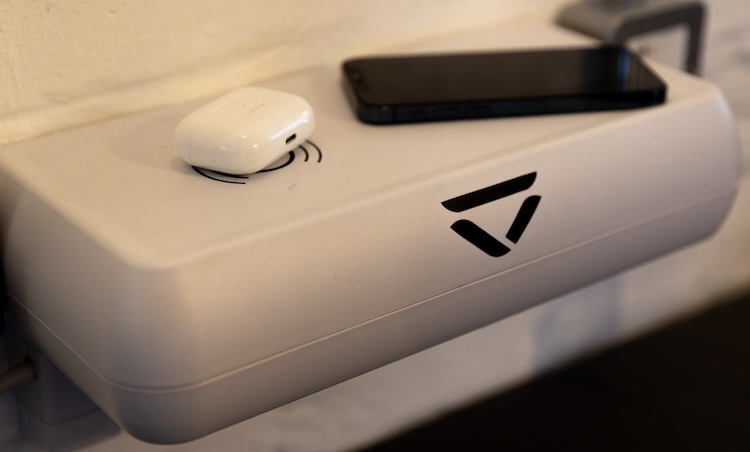
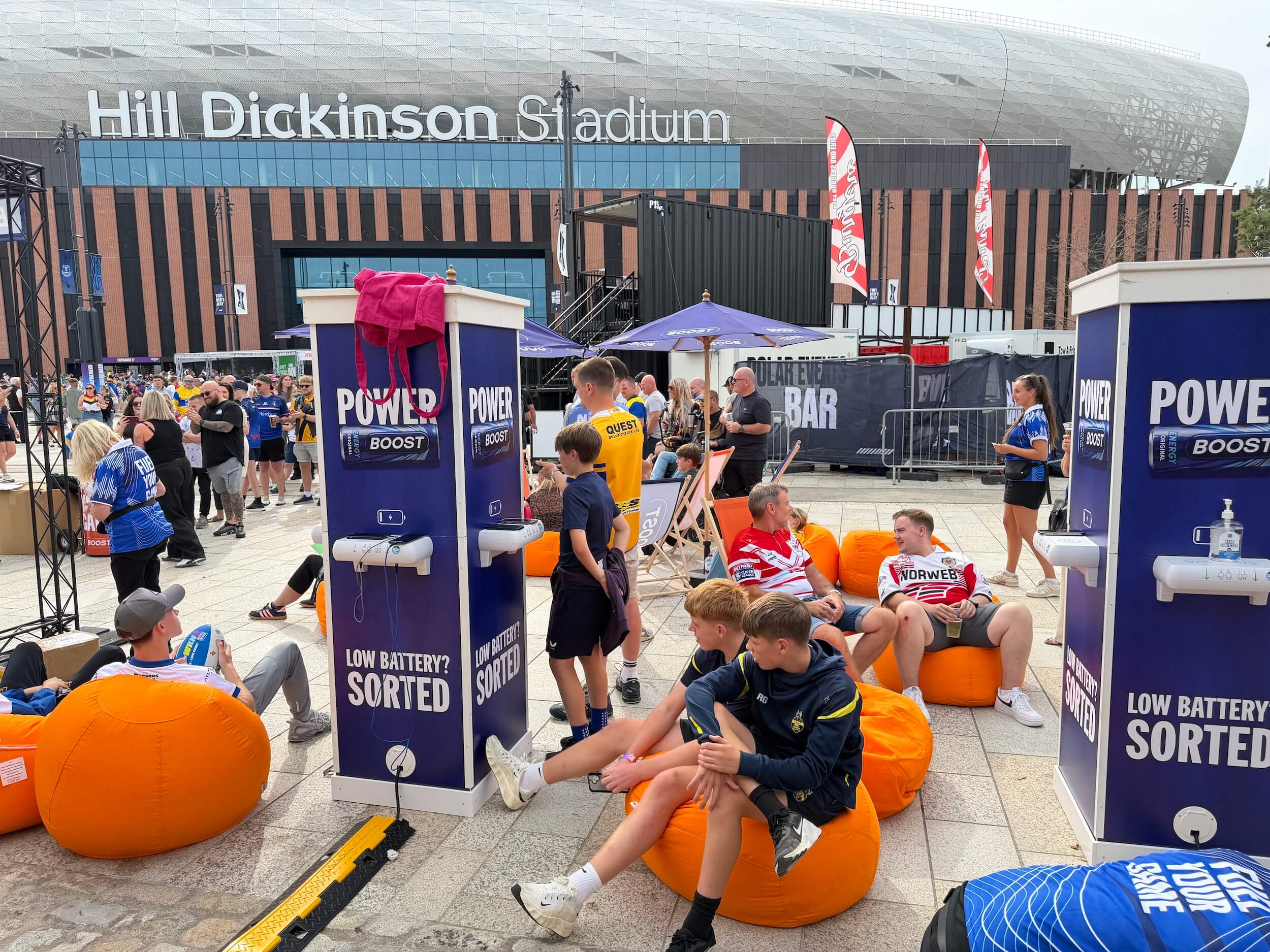
Stadium-wide provision doesn't mean installing the same thing everywhere. A permanently wall-mounted charging shelf may make far more sense in a smaller hospitality room, conference space or an area only opened for particular events, while visible free-standing charging stations can serve larger concourses, fan zones and spaces whose use changes throughout the week. Portable power banks or lockers may solve another requirement again. The infrastructure can be permanent without every part of it needing to be fixed in place.
That doesn't mean covering every square metre with chargers. It means thinking about where people naturally gather, where they can comfortably stop and what else is happening around them.
Watch what supporters actually do
Watch how people actually use the building rather than assuming how you'd like them to use it, then adjust accordingly.
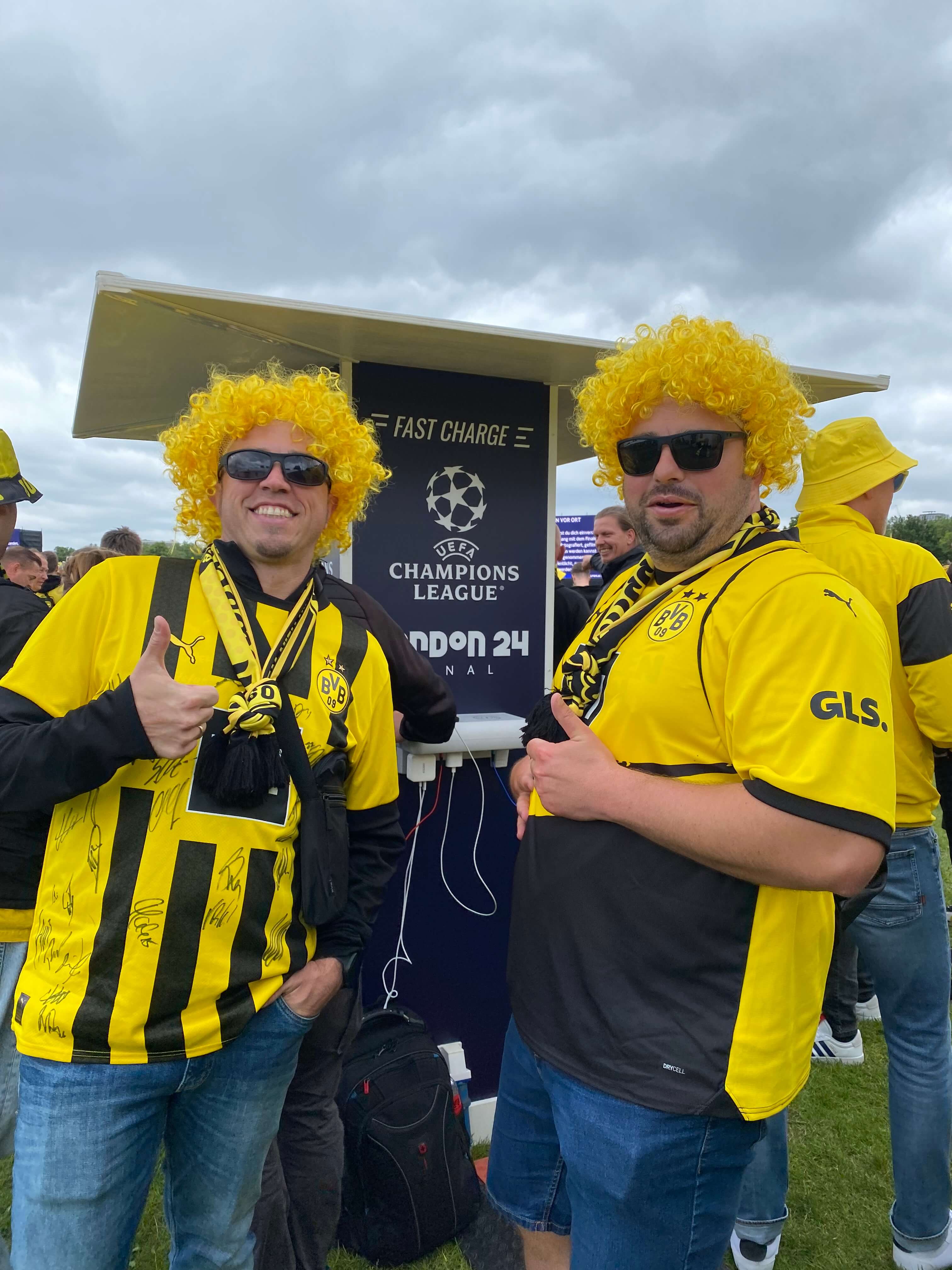
Some of our most useful lessons at Crable have come from doing exactly that. At the official fan meeting points in Hyde Park and Victoria Embankment for the 2024 UEFA Champions League Final, our Charging Totems were in almost constant use by travelling Real Madrid and Borussia Dortmund supporters. We'd included European sockets alongside USB and wireless charging and they proved particularly useful. Hardly revolutionary, but a good example of starting with the people who are going to use something rather than the product you happen to want to install.
And what a charging point does needn't be fixed forever either. Artwork can change, charging technology can be upgraded and screens or other digital elements can carry different content for different events. Charging locations can feature on apps and interactive maps, while digital communications can direct supporters towards the provision available in the part of the stadium being used that day. At Crable we've also used charging points to gather live customer feedback through Sticky. Once you start thinking about the few minutes somebody chooses to spend at a charging point, rather than simply the electricity coming out of it, other opportunities begin to appear.
There isn't a universal answer to phone charging and there probably shouldn't be. What works in hospitality may not work on a busy concourse and what suits a football stadium may be completely wrong for a racecourse, arena, rugby ground, railway station or airport. The important thing is that somebody has thought about it.
Stadium operators already devote enormous thought to Wi-Fi, digital ticketing, payments, apps and all the other technology that now sits behind a good fan experience. Yet charging can still be the bit that gets left to chance.
Perhaps that's the simplest test of all. If a supporter asks a member of staff, “Where can I charge my phone?”, is there a good answer?


Join our mailing list
Sign up to our mailing list to be informed of relevant updates and insights from Crable.