Interview multiple candidates
Lorem ipsum dolor sit amet, consectetur adipiscing elit proin mi pellentesque lorem turpis feugiat non sed sed sed aliquam lectus sodales gravida turpis maassa odio faucibus accumsan turpis nulla tellus purus ut cursus lorem in pellentesque risus turpis eget quam eu nunc sed diam.
Search for the right experience
Lorem ipsum dolor sit amet, consectetur adipiscing elit proin mi pellentesque lorem turpis feugiat non sed sed sed aliquam lectus sodales gravida turpis maassa odio.
- Lorem ipsum dolor sit amet, consectetur adipiscing elit.
- Porttitor nibh est vulputate vitae sem vitae.
- Netus vestibulum dignissim scelerisque vitae.
- Amet tellus nisl risus lorem vulputate velit eget.
Ask for past work examples & results
Lorem ipsum dolor sit amet, consectetur adipiscing elit consectetur in proin mattis enim posuere maecenas non magna mauris, feugiat montes, porttitor eget nulla id id.
- Lorem ipsum dolor sit amet, consectetur adipiscing elit.
- Netus vestibulum dignissim scelerisque vitae.
- Porttitor nibh est vulputate vitae sem vitae.
- Amet tellus nisl risus lorem vulputate velit eget.
Vet candidates & ask for past references before hiring
Lorem ipsum dolor sit amet, consectetur adipiscing elit ut suspendisse convallis enim tincidunt nunc condimentum facilisi accumsan tempor donec dolor malesuada vestibulum in sed sed morbi accumsan tristique turpis vivamus non velit euismod.
“Lorem ipsum dolor sit amet, consectetur adipiscing elit nunc gravida purus urna, ipsum eu morbi in enim”
Once you hire them, give them access for all tools & resources for success
Lorem ipsum dolor sit amet, consectetur adipiscing elit ut suspendisse convallis enim tincidunt nunc condimentum facilisi accumsan tempor donec dolor malesuada vestibulum in sed sed morbi accumsan tristique turpis vivamus non velit euismod.
Introduction
There’s a question most organisations don’t ask themselves directly.
Do we genuinely design around experience, or do we just talk about it?
It’s easy to say experience matters. Harder to prove it shapes decisions, operations and investment. Harder still to point to where it changes behaviour in measurable ways.
Across football clubs, hospitals and live events, “experience” now appears everywhere. It’s in strategy decks, mission statements and post-event reviews.
But language isn’t the same as practice.
If experience really mattered, would we design our environments the way we currently do?
There’s a simple way to recognise the difference.
Think about a restaurant where staff are trained to ask, “Is everything okay with your meal?”
In some places, it’s a genuine question. If something is wrong, it gets fixed. The answer matters.
In others, it’s clearly a script. The question is asked, but nothing changes. It’s a step to complete, not a signal to act on.
The action looks the same. The intent is completely different.
That is the gap between treating experience as a tick-box and treating it as a belief.
Because when you look more closely across healthcare, sport and live environments, something more revealing emerges. The organisations seeing results are not the ones talking about experience more. They are the ones where it genuinely shapes how things work.
Three Sectors, Three Strengths
Live events are often the most instinctive when it comes to experience. They understand attention. They know how to create energy, immersion and moments that hold people in place. When an event works, it works because people are engaged, present and willing to participate.
Sport, particularly in stadium environments, has become highly attuned to behaviour. Clubs and operators increasingly understand how fans move, where they dwell and what drives spend. Experience here is closely tied to commercial outcomes and investment tends to follow what can be measured.
Healthcare approaches experience differently again. Within the NHS and wider clinical research, patient experience is not framed as a branding exercise but as a component of quality. Studies published in BMJ Quality & Safety have shown clear associations between positive patient experience and improved clinical outcomes, including better adherence to treatment and reduced readmission rates.
Each of these sectors is often seen as a leader. And in specific ways, that’s true.
But none of them are consistently strong across the full experience.
Events can create powerful engagement, yet often lack structured measurement. Stadiums can track behaviour in detail, yet still struggle with friction at key moments. Healthcare embeds experience into its definition of quality, yet the lived journey can still feel fragmented.
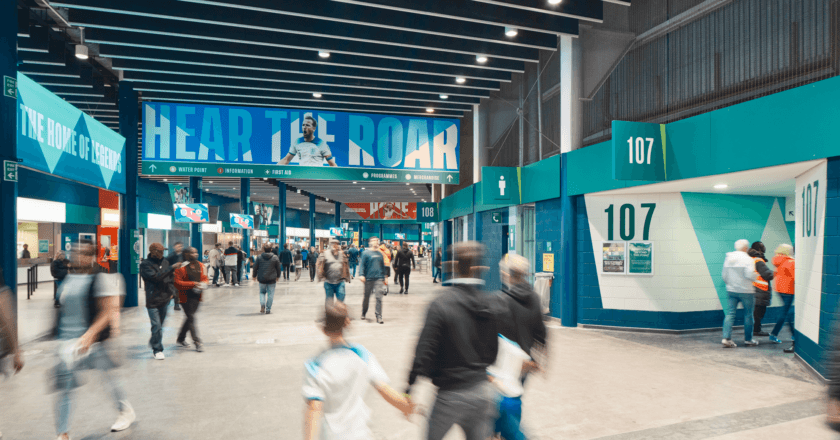
No sector has solved experience. But each has revealed what actually matters.
The Pattern That Connects Them
Once you step back, the similarities become difficult to ignore.
In sport, improvements in fan experience have been linked to increased in-stadium spend and stronger retention. Research from Deloitte’s Fan Engagement work suggests that highly engaged fans can spend up to 2–3 times more across ticketing, retail and in-stadium purchases than less engaged attendees.
Healthcare arrives at the same conclusion from a very different direction. Patient experience is treated as a key quality indicator within the NHS, alongside safety and effectiveness, because it directly influences whether care is understood, followed and ultimately successful. Hospitals with stronger patient experience scores also tend to achieve higher Care Quality Commission ratings, reinforcing the connection between experience and system performance.
Live events follow the same pattern, even if the language is less formal. Success is rarely defined by attendance alone. It comes down to what people actually do once they arrive, how long they stay, where they go and what they engage with. Across live environments and adjacent sectors such as retail, even modest increases in dwell time have been shown to drive measurable uplifts in spend, with some estimates suggesting a 1 percent increase in dwell time can lead to a 1–1.3 percent increase in revenue.
Attendance is a number. Engagement is a behaviour.
Across all three, the conclusion is consistent. Experience shapes behaviour and behaviour drives outcomes.
From Assumption to Observation
One of the clearest shifts across these sectors is the move from assumption to observation.
In stadiums, operators now analyse crowd flow, dwell time, transaction speed and engagement across the entire fan journey. Experience is no longer inferred; it is observed.
"Across our assessments the difference between high-performing and underperforming venues is rarely demand. It’s how effectively they manage flow, friction and dwell."
Darren Young, The Fan Experience Company
This is where the shift becomes visible. The best organisations are not relying on scripts or standards alone. They are building a real understanding of how people behave, and using that to shape the environment.
Healthcare has taken a more structured approach, using national surveys, patient-reported outcome measures and real-time feedback to understand experience at scale. Events are increasingly following suit, combining movement data, engagement tracking and operational insight to build a clearer picture of how environments actually function.
Once you can see behaviour, you can start to shape it.
And that is the point where experience moves beyond process and becomes something embedded.
Sports clubs that excel in fan experience understand that it starts long before the game begins. The focus shifts from what can’t be controlled—kick-off time, weather, results—to what can: the quality of the environment and the interactions within it.
As Darren Young notes, the priority is “creating positive interactions from the moment fans arrive”—because those early moments shape not just the experience on the day, but how supporters feel about the club as a whole.
Fans respond to that intent. When clubs demonstrate that they are actively trying to improve the experience—rather than settling for the minimum—supporters notice.
The result is tangible: fans arrive earlier, stay longer, spend more, and are more forgiving when things don’t go right on the pitch.

Where Experience Breaks Down
If experience is now being taken seriously, the more useful question is where it still fails.
The answer is rarely dramatic. It sits in the gaps between things.
A seamless ticket purchase followed by slow entry.
High-quality clinical care paired with unclear communication.
Strong programming undermined by poor movement or access.
These are not failures of intent. They are failures of connection.
People don’t experience moments. They experience transitions.
When those transitions break down, the experience fragments. And when the experience fragments, behaviour changes.
This is where friction becomes critical.
Research across customer experience and retail suggests that more than 70 percent of consumers will abandon a purchase due to friction, whether caused by delays, complexity or poor design. While the context differs, the behavioural response is the same across physical environments.
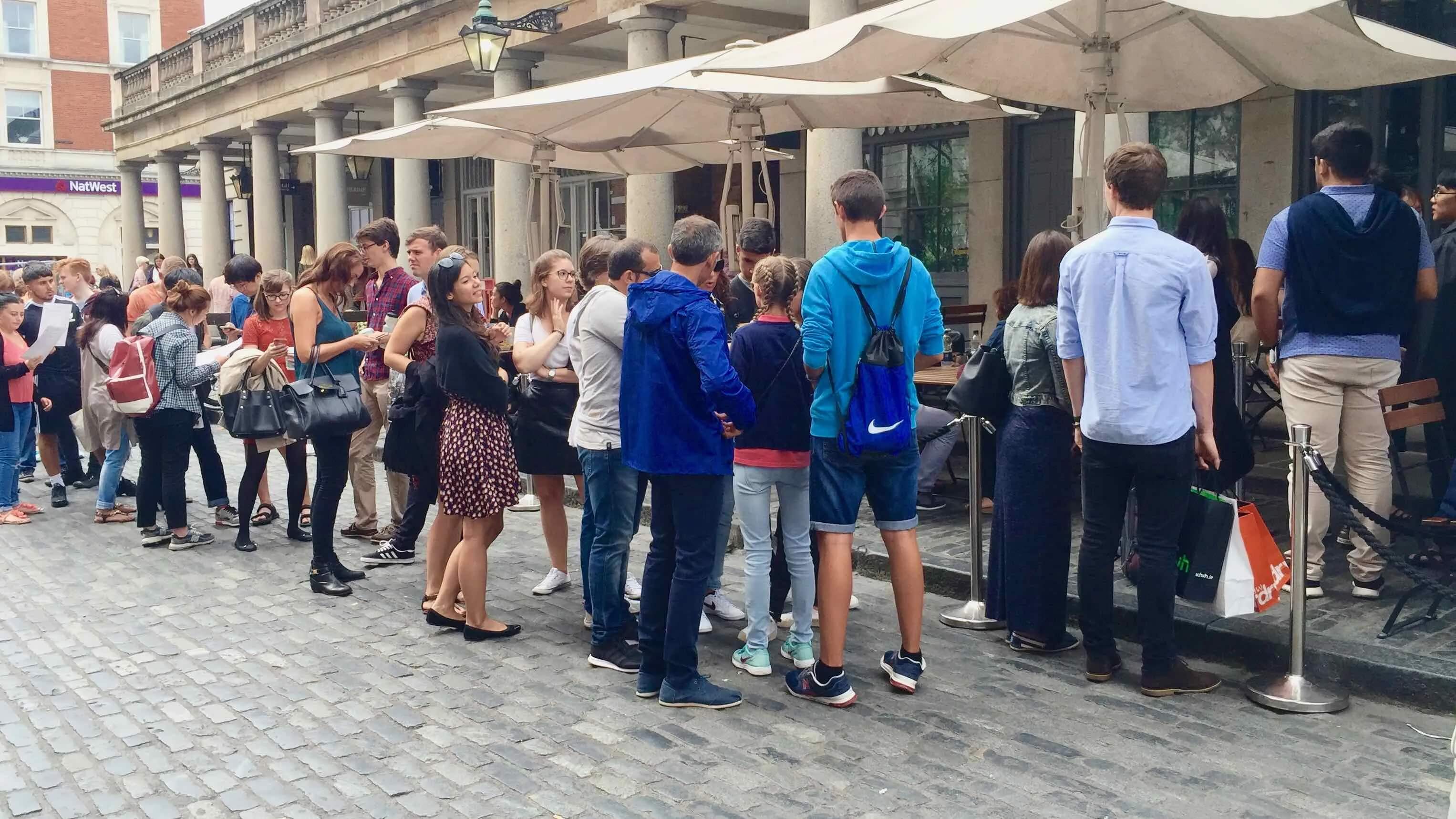
In healthcare, friction reduces understanding and adherence. In stadiums, it shortens dwell time and limits spend. In events, it disrupts engagement and participation.
Friction doesn’t just slow people down. It changes what they choose to do.
So What’s the Real Question?
If all three sectors are moving in this direction, the real question is not whether experience matters.
It’s whether organisations truly believe in it.
Because that is the real divide.
Not between good and bad experiences, but between those that treat experience as something to demonstrate and those that build it into how they operate.
Between surface and substance.
Between script and intent.
Between tick-box and belief.
When experience is treated as a tick-box, it gets delivered but not lived. When it is treated as a belief, it shapes decisions, behaviours and outcomes across the entire organisation.
That means thinking in terms of flow rather than moments, behaviour rather than perception and outcomes rather than intent.
Conclusion
Across healthcare, sport and live events, the same pattern is emerging from very different starting points.
Experience is no longer something that sits on top of operations. It is becoming part of how those operations function.
Experience is not a layer. It is the foundation everything else is built on.
Each sector brings its own strengths. None has the full answer.
But together, they point to something clear.
Organisations that treat experience as a belief will design environments that perform better. Those that continue to treat it as a requirement or a standard may improve perception, but will struggle to influence outcomes.
That is the gap that is opening up.
And it is not a small one.


Join our mailing list
Sign up to our mailing list to be informed of relevant updates and insights from Crable.