Interview multiple candidates
Lorem ipsum dolor sit amet, consectetur adipiscing elit proin mi pellentesque lorem turpis feugiat non sed sed sed aliquam lectus sodales gravida turpis maassa odio faucibus accumsan turpis nulla tellus purus ut cursus lorem in pellentesque risus turpis eget quam eu nunc sed diam.
Search for the right experience
Lorem ipsum dolor sit amet, consectetur adipiscing elit proin mi pellentesque lorem turpis feugiat non sed sed sed aliquam lectus sodales gravida turpis maassa odio.
- Lorem ipsum dolor sit amet, consectetur adipiscing elit.
- Porttitor nibh est vulputate vitae sem vitae.
- Netus vestibulum dignissim scelerisque vitae.
- Amet tellus nisl risus lorem vulputate velit eget.
Ask for past work examples & results
Lorem ipsum dolor sit amet, consectetur adipiscing elit consectetur in proin mattis enim posuere maecenas non magna mauris, feugiat montes, porttitor eget nulla id id.
- Lorem ipsum dolor sit amet, consectetur adipiscing elit.
- Netus vestibulum dignissim scelerisque vitae.
- Porttitor nibh est vulputate vitae sem vitae.
- Amet tellus nisl risus lorem vulputate velit eget.
Vet candidates & ask for past references before hiring
Lorem ipsum dolor sit amet, consectetur adipiscing elit ut suspendisse convallis enim tincidunt nunc condimentum facilisi accumsan tempor donec dolor malesuada vestibulum in sed sed morbi accumsan tristique turpis vivamus non velit euismod.
“Lorem ipsum dolor sit amet, consectetur adipiscing elit nunc gravida purus urna, ipsum eu morbi in enim”
Once you hire them, give them access for all tools & resources for success
Lorem ipsum dolor sit amet, consectetur adipiscing elit ut suspendisse convallis enim tincidunt nunc condimentum facilisi accumsan tempor donec dolor malesuada vestibulum in sed sed morbi accumsan tristique turpis vivamus non velit euismod.
The Festival Reality No One Plans For
There’s a moment at every festival that rarely makes it into planning conversations. It doesn’t happen on stage or in a queue, but quietly, individually and repeatedly across the site.
It’s the moment someone looks down at their phone and realises the battery is running low.
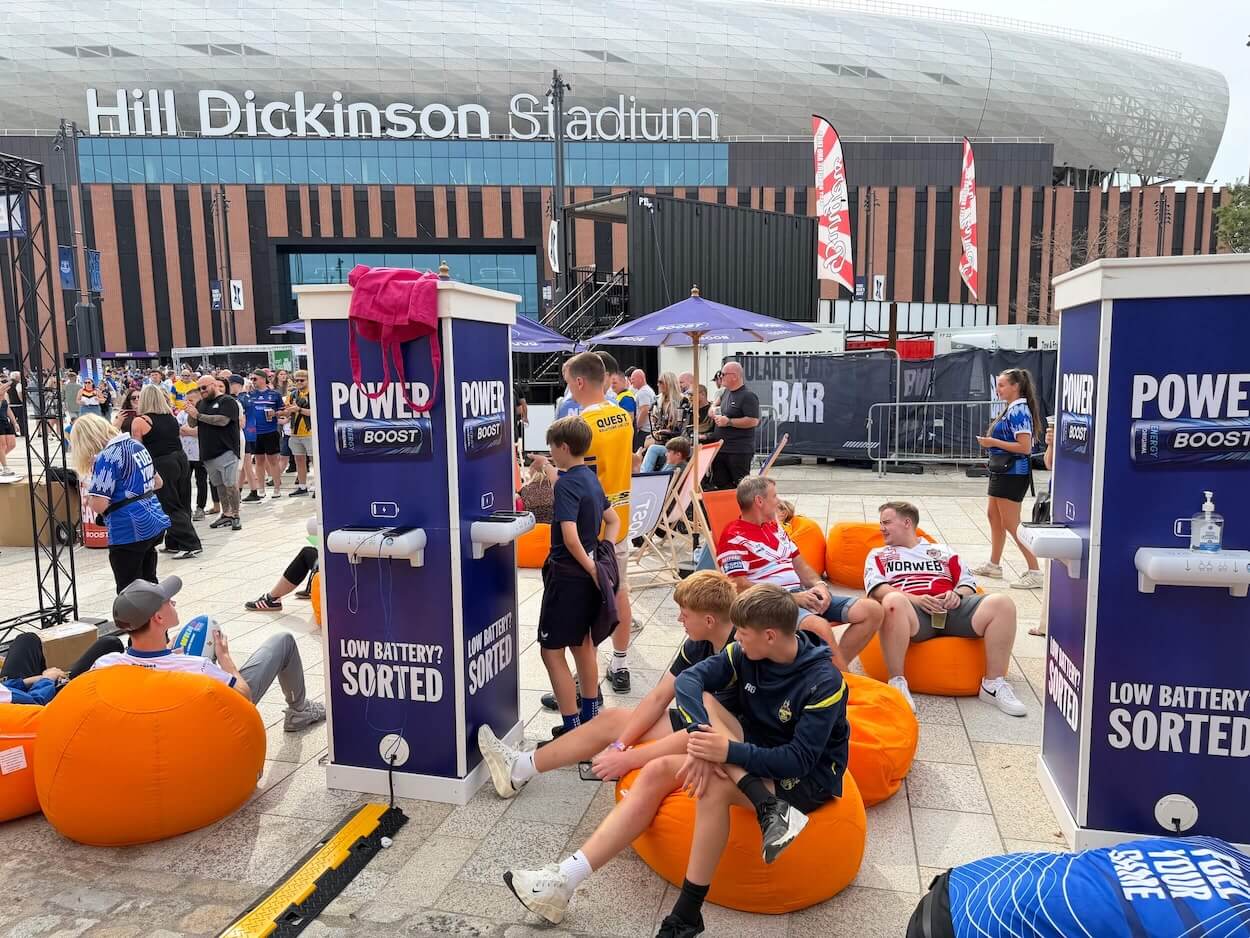
At first, it seems manageable. They’ll be careful. Maybe stop filming. Maybe check fewer things. But from that point on, behaviour starts to shift. Decisions become more cautious, movement more deliberate and attention increasingly focused on finding power. This is where temporary charging infrastructure becomes critical.
At modern festivals, a phone is no longer just a device. It’s a ticket, a wallet, a map, a camera and a way to stay connected to both the event and other people. When it starts to fail, the experience begins to narrow.
At a festival, power isn’t just utility—it’s influence.
The Modern Festival Is Fully Mobile
Modern Festivals have evolved rapidly over the past decade, but not always evenly. What used to be handled through paper tickets, cash and static information is now almost entirely digital.
Entry is managed through mobile tickets. Payments are increasingly cashless. Schedules, maps and updates live in apps. Even something as simple as finding friends relies on messaging, location sharing, or dropped pins.
This shift has brought huge benefits in efficiency and experience. But it has also introduced a new dependency: the need for a consistently powered audience.
When phones stop working, it isn’t just inconvenient—it disrupts the way the entire event is navigated and experienced.

Battery Anxiety and Behaviour Change
Battery anxiety is rarely sudden. It builds gradually, influencing behaviour well before a phone actually runs out of power.
People begin to adapt earlier than you might expect. They reduce usage, avoid unnecessary movement and start to think about where they can recharge. Importantly, they don’t wait until they are at 5%. They act in advance.
This has a subtle but significant effect across a festival site. People begin to cluster around known charging locations, leave areas earlier than planned and avoid exploring parts of the site where they are unsure they can access power.
Battery anxiety doesn’t just affect individuals—it shapes how people move through the entire festival.
What appears to be a personal concern becomes a collective behavioural pattern.
Charging is no longer a luxury—it has become an expected part of live events.
The Commercial Impact of Dead Phones
It is easy to frame charging purely as an experience issue, but the commercial implications are just as important.
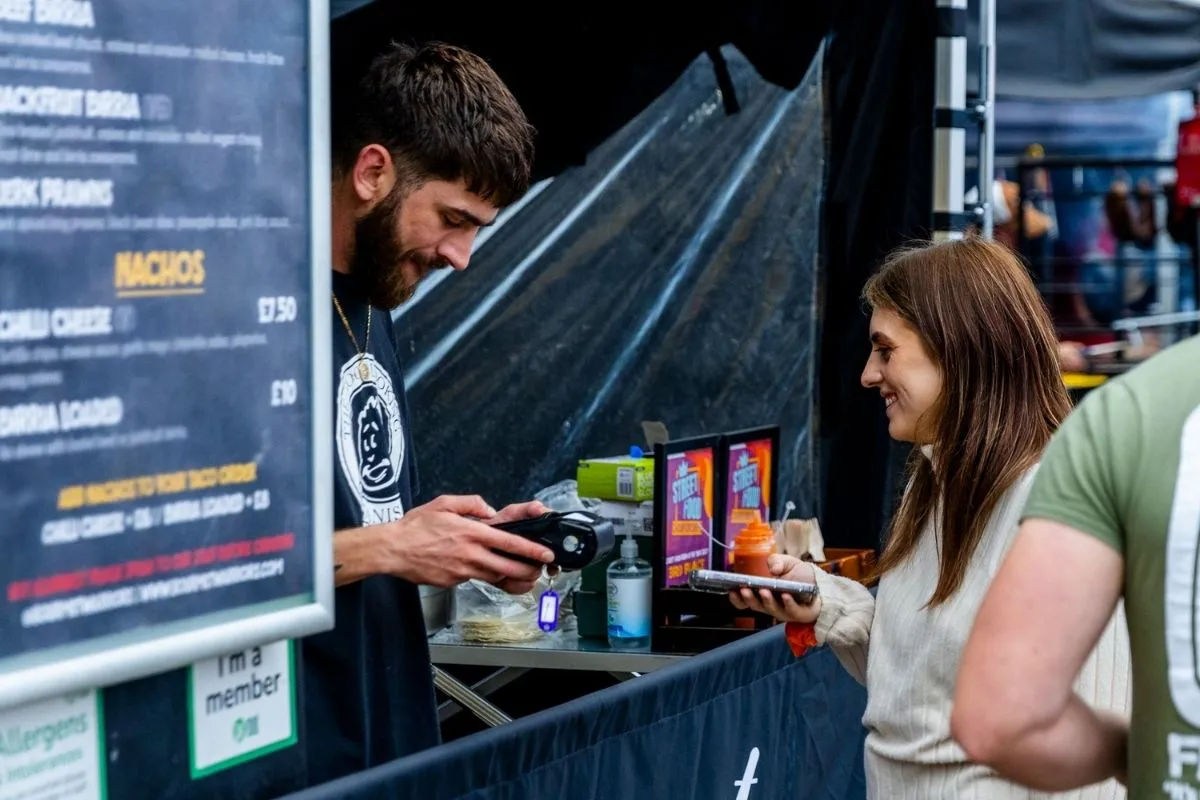
Festival spending is often driven by impulse. A second drink, an unplanned meal, or a spontaneous purchase at a merch standall rely on frictionless payment. Increasingly, that means a working phone.
When battery levels drop, behaviour becomes more conservative. People delay purchases, reduce frequency, or decide against buying altogether. Over the course of a large, multi-day event, this shift can have a measurable impact.
For organisers seeing this firsthand, it’s often the point where infrastructure becomes a priority.
When phones stop working, spending behaviour changes—and not in ways festivals want.
Dead phones are not just a minor inconvenience. They represent lost opportunities at scale.
Experience, Memory, and Connection
Beyond revenue, there is a more human cost.
Festivals are built on shared moments—captured, replayed and extended through phones. When battery disappears, so does the ability to document, share and stay connected.
People become harder to find. Navigation becomes less certain. In some cases, safety and reassurance are reduced, particularly as the day moves into night.
When a phone dies, the experience doesn’t just pause—it contracts.
The festival continues, but participation changes.
From Utility to Strategic Touchpoint
Charging is typically treated as a basic service—something necessary but not particularly valuable. However, when viewed through the lens of behaviour, it becomes something far more significant.
Charging creates predictable moments where people stop, wait and focus on their device. In an environment defined by movement and distraction, these moments are rare.
They represent an opportunity not to interrupt the experience, but to enhance a moment that already exists.
Shaping Movement Through Placement
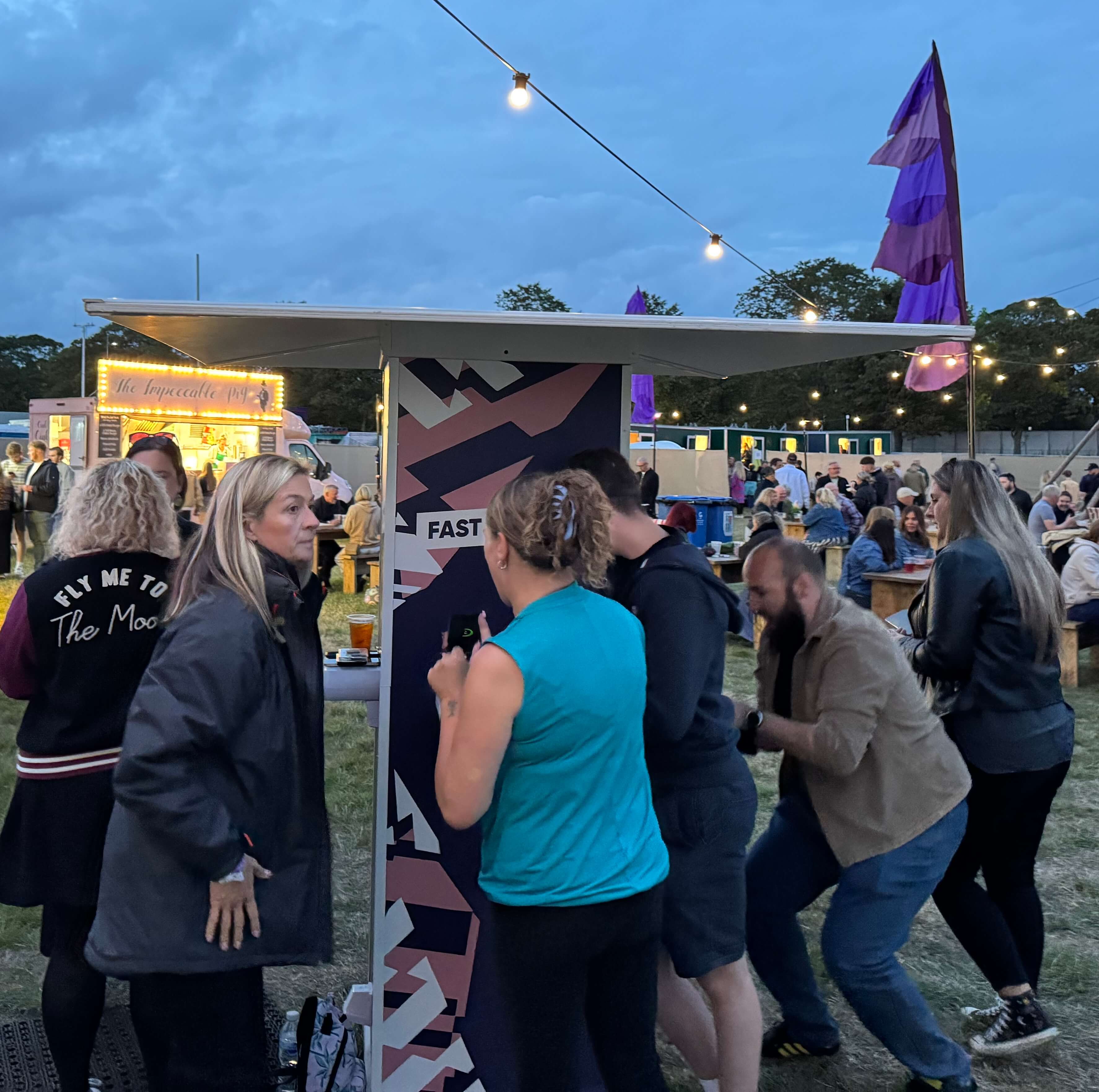
One of the more interesting implications of charging behaviour is its impact on movement.
Because people actively seek out charging locations, these points become anchors within the site. Their placement can influence where people go, how long they stay and how evenly footfall is distributed.
Positioning charging in quieter or underutilised areas can naturally draw people towards them, helping to reduce congestion elsewhere and activate spaces that might otherwise be overlooked.
The most effective way to influence movement is not to direct it, but to design around what people already need.
This turns charging from a reactive service into a proactive tool for shaping the event.
From ‘Meet at the Bar’ to ‘Meet at the Totem’
Every festival has informal meeting points—places people default to when plans break down.
Charging stations have the potential to become something more deliberate. Unlike a bar or a stage, they offer a clear, practical reason to be there. They are visible, memorable and increasingly relied upon.
“Meet me by the charging station” is a simple instruction, but one that reflects how behaviour is changing.
The most effective landmarks at a festival are the ones people actually need.
Connecting Physical and Digital Experiences
Charging becomes even more valuable when combined with interaction.
Through NFC-enabled infrastructure provided by Sticky Connections, charging points can become entry points into a wider experience. A simple tap can unlock an offer, guide someone to a nearby vendor, or connect them with a sponsor activation.
This doesn’t require apps or complex onboarding. It builds on a moment that already exists, adding value without introducing friction.
The Role of Data in Understanding Behaviour
Understanding how people move through a festival has traditionally been difficult. Assumptions are often made, but without reliable data, insight is limited.
Technologies such as Meshh allow operators to see how people actually behave—tracking movement patterns, dwell time, and congestion points across the site.
When combined with known behaviours like charging, this creates a far more complete picture. It becomes possible not just to observe behaviour, but to design around it.
Why Night-Time Changes Everything
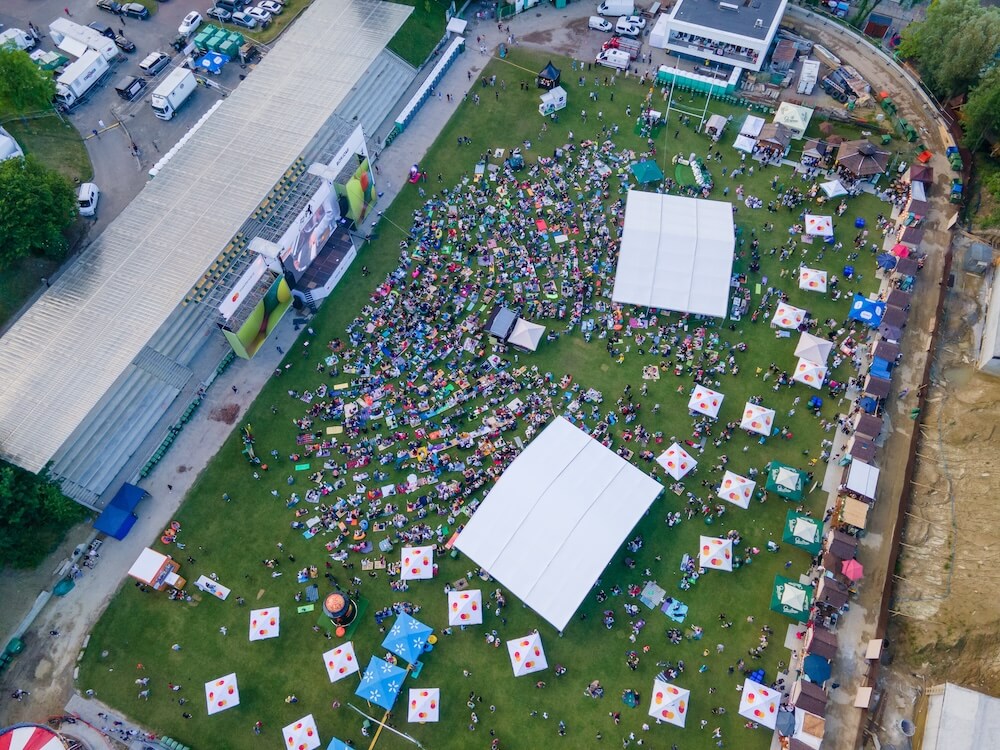
The importance of battery becomes even more pronounced as the day progresses.
At night, phones are used more frequently—for navigation, communication and reassurance. Visibility is lower, movement is denser and reliance on devices increases.
At the same time, batteries are at their lowest.
As the sun goes down, a working phone stops being a convenience and becomes essential
When power runs out at this stage, people restrict movement, leave earlier, or stay within familiar areas. The experience becomes smaller.
A Scalable Opportunity
Addressing this does not require a complete redesign of a festival.
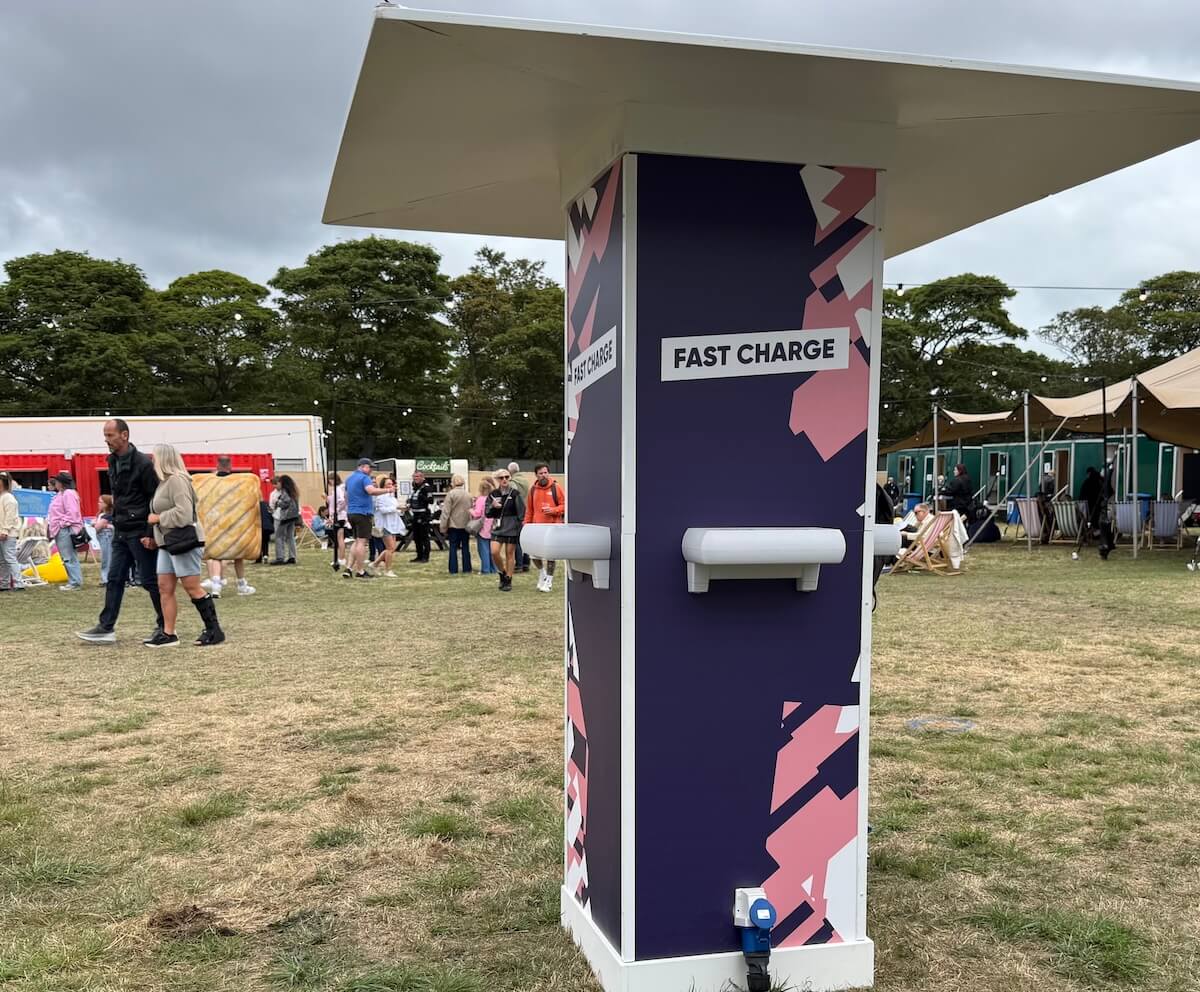
This can begin with a small number of strategically placed festival charging stations in high dwell or strategically important areas. From there, patterns can be observed and the network expanded.
Over time, phone charging becomes more than a utility. It becomes part of the underlying structure of how the event functions.
Conclusion — The Cost of Overlooking the Obvious
Battery life is rarely considered a strategic priority. It is often seen as a logistical detail rather than a design decision.
But across a festival, it quietly influences behaviour, movement, spend and experience.
Dead phones do not just create inconvenience. They reduce engagement, limit participation and remove opportunities—both for the audience and for operators.
The most valuable moments at a festival are not just on stage—they are in the hands of the audience and they depend on staying connected.
The difference isn’t whether people need power—it’s whether you’ve planned for it.
If you’re planning a festival or live event and want to avoid these lost moments, get in touch to explore buying, hiring, or renting the right charging solution.
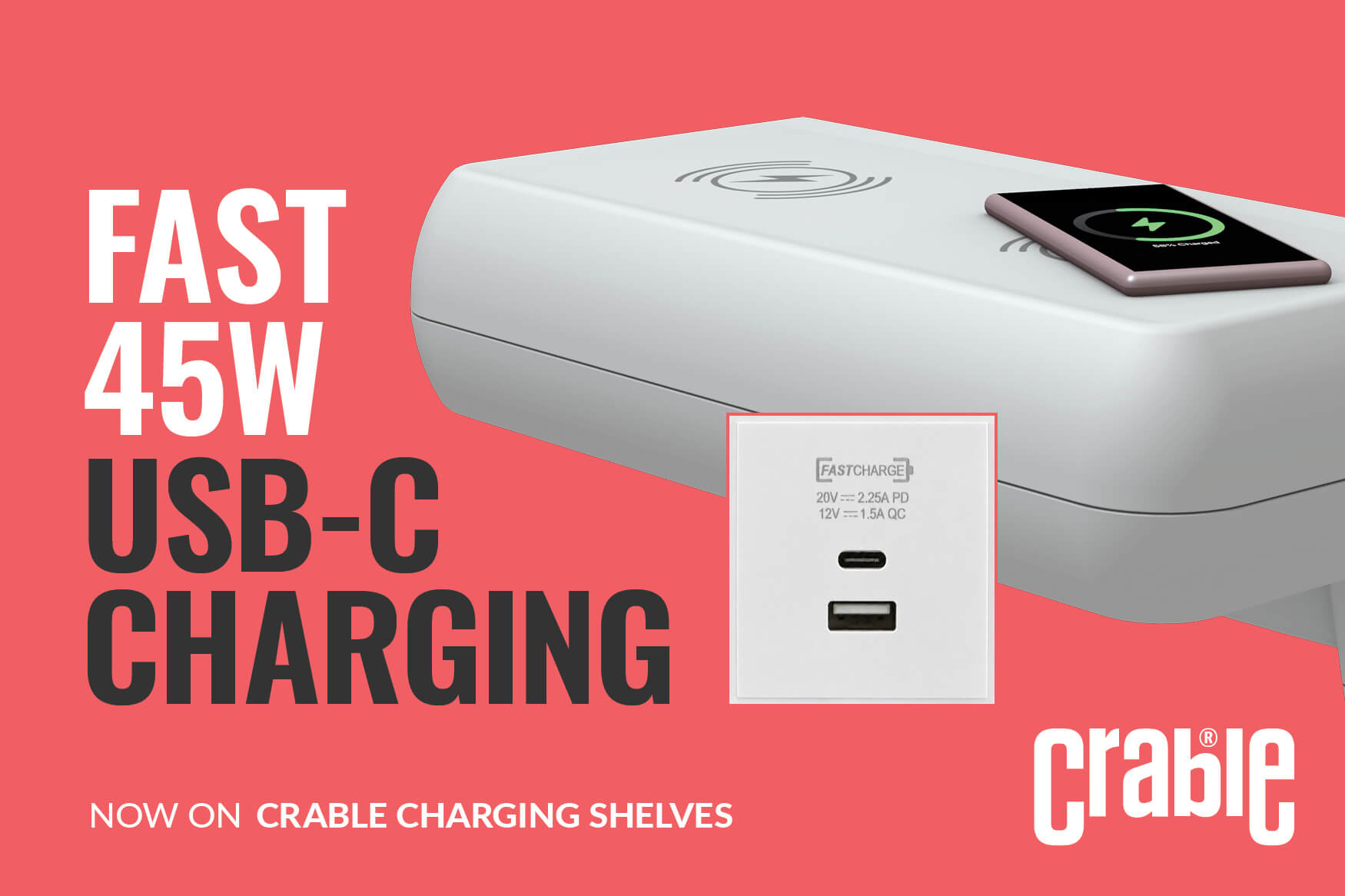
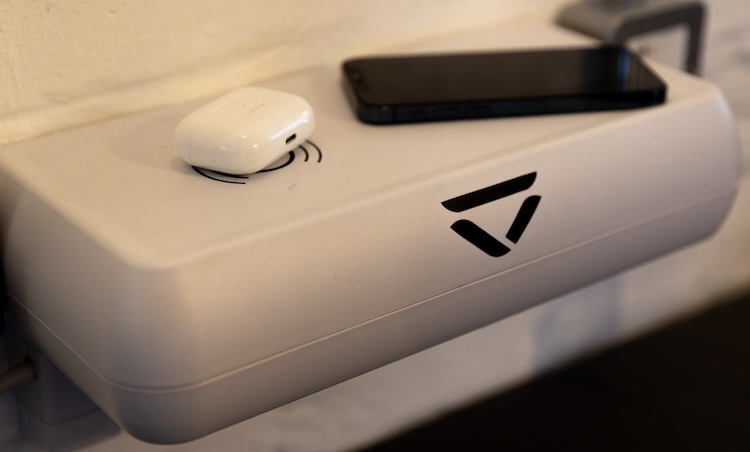
Or explore Crable’s event charging solutions to see how this works in practice.


Join our mailing list
Sign up to our mailing list to be informed of relevant updates and insights from Crable.

Festival Case Study
We’ve seen this play out in real-world events. Read about or work with RG Live at the Come Together Festival in Newcastle upon Tyne
Download